#Clock_Challege
Clock — The City, Screen, and Time
We are looking for works to be screened on the large screen (W 18,000mm) of AxCROSS at KITTE Osaka, directly connected to Osaka Station. The theme is "Clock". Five selected works will be screened at AxCROSS from August 1 to the end of October 2026.
About the Theme — The City, Screen, and Time
Everyone passing through a station is thinking about time. How many minutes until the train leaves. Whether they will make it to the meeting point. What time it is, right now. The city is a place where countless people pass one another, each carrying their own time — and stations are the places most sensitive to time.
That is why cities have always had clocks. The great clock in front of the station told the time, became a landmark for meeting up, and grew into part of the city's memory. Meanwhile, most of today's urban screens show advertising. For passersby, there are screens with a reason to look at, and screens without one. The moment signage shows a clock, it crosses that line: a function people glance at many times a day, and an expression that answers their glance, overlap on a single screen.
AxCROSS stands in the preserved building of the former Osaka Central Post Office, a place where letters once carried people's thoughts across time. We look forward to seeing your clock tick new time on the wall of this building that has counted so many years. It can be a functional clock that tells the exact time, or an abstract meditation on the flow of time and memory — interpret "Clock" freely.
What is AxCROSS?
AxCROSS is a creative space located in the preserved building of the former Osaka Central Post Office on the 4th floor of KITTE Osaka. It is a new urban space where business, art, and culture merge, and is expected to catch the attention of many visitors to KITTE Osaka.
Equipped with five projectors and a content delivery system, it manages a variety of digital art and advertising, including digital artworks such as Generative Art.
Rules of CHALLENGE
- The theme is "Clock". We welcome free interpretations of the theme, from functional works that display the actual time to abstract expressions of time, memory, and its passage
- Works that respond to the venue itself — a preserved building of the former Osaka Central Post Office that has witnessed the passing of time — are also welcome
- Five works will be selected from the submissions and screened at AxCROSS
Clocks in the Cityscape — Screen in Practice
The clock is a motif that has been reinvented again and again on signage.
Step out of the ticket gates of Toranomon Hills Station (Tokyo Metro), and you will find "just a clock" displayed on a 17-meter-wide horizontal LED. This is TORANOMON HILLS CLOCK (2023) by Yugo Nakamura (tha ltd.). At the top of every hour, a time-cue staging runs in sync with the surrounding displays, and the clock works as a landmark that generates the rhythm of the district. Nakamura has been remaking the clock for over fifteen years — dropping Helvetica numerals into water in DROPCLOCK (2009), and depicting time as endless labor in Industrious Clock for the project "ZeitRaum" (2012) at Vienna International Airport, where a hand keeps writing and erasing the digits.
TORANOMON HILLS CLOCK (2023) © tha ltd. — https://tha.jp/9564 / YouTube
Elsewhere in the world, Raven Kwok's time++ (2019) is permanently installed at TODTOWN, a transit hub in Shanghai, generatively visualizing the passage of time itself as particles accumulate every second.
Alexis André's *720 Minutes* (2021) is a generative artwork with 12 hours × 60 minutes = 720 different clock expressions, each of which activates only during its assigned minute.
The function of telling time, and the strength of artistic expression — clocks on signage hold both, and generate a rhythm unique to the place where they stand.
Clocks on NEORT
Many "clocks" have already been posted to NEORT. A clock written in code never stops running, and can stand on a city screen just as it is. Here are some of the clocks that came before:
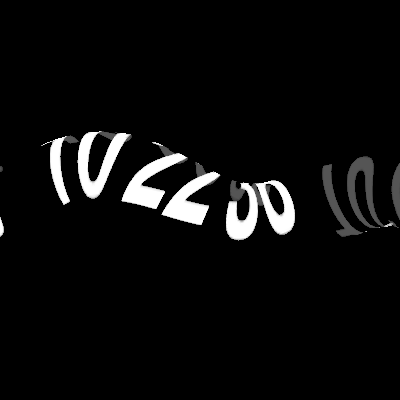 《Distorted Clock》kitasenjudesign | 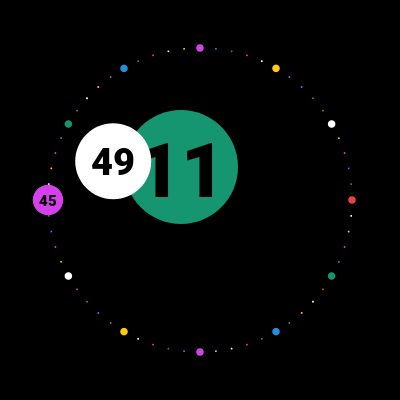 《時計01》OKAZZ |
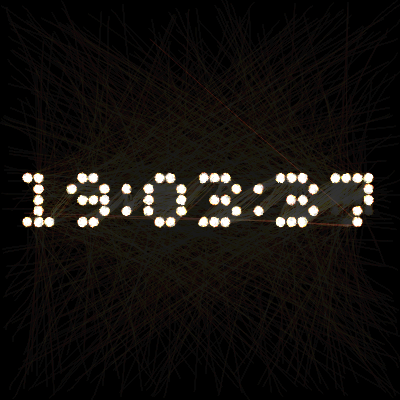 《particlock》fumix | 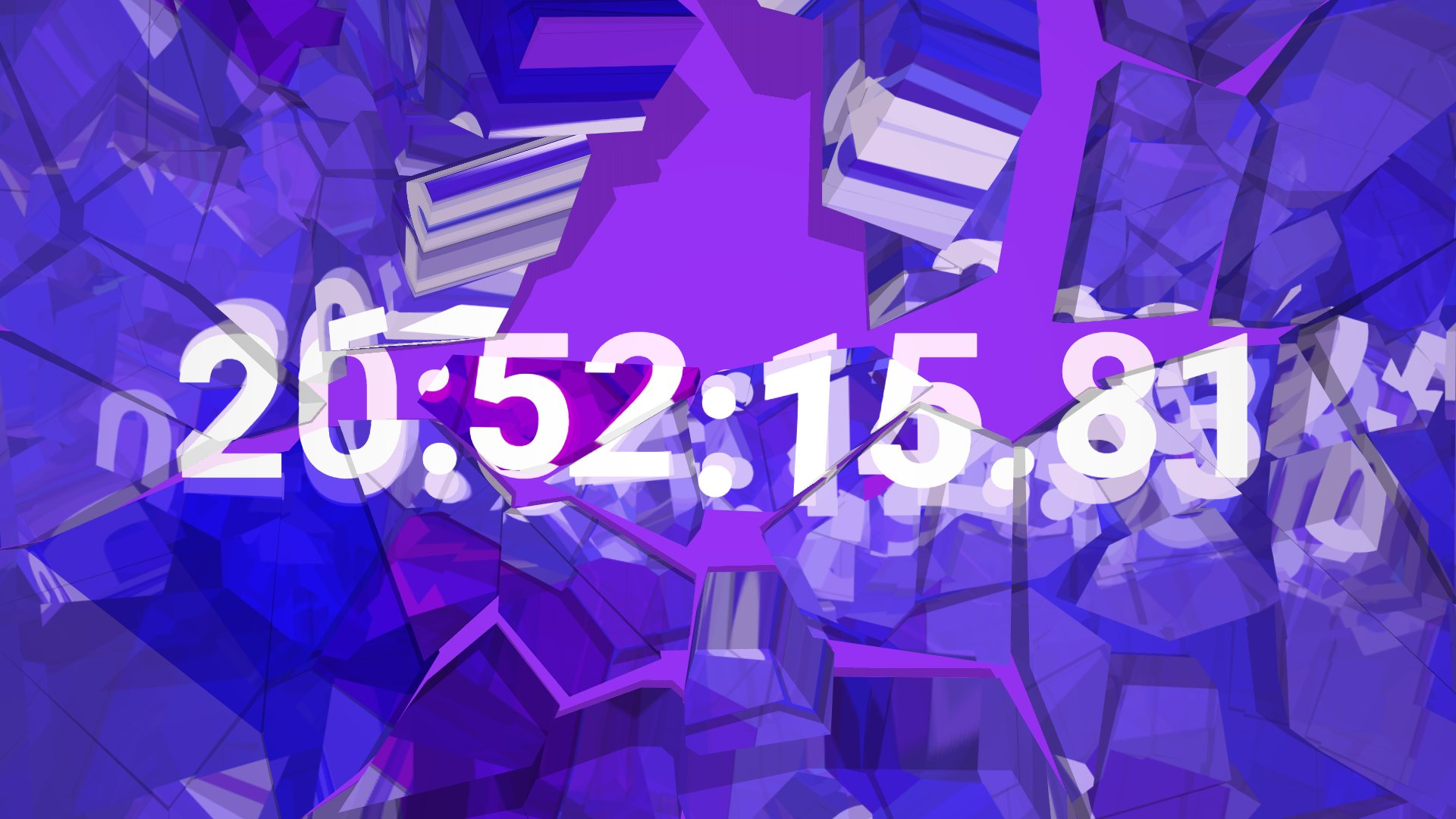 《Then》phi16 |
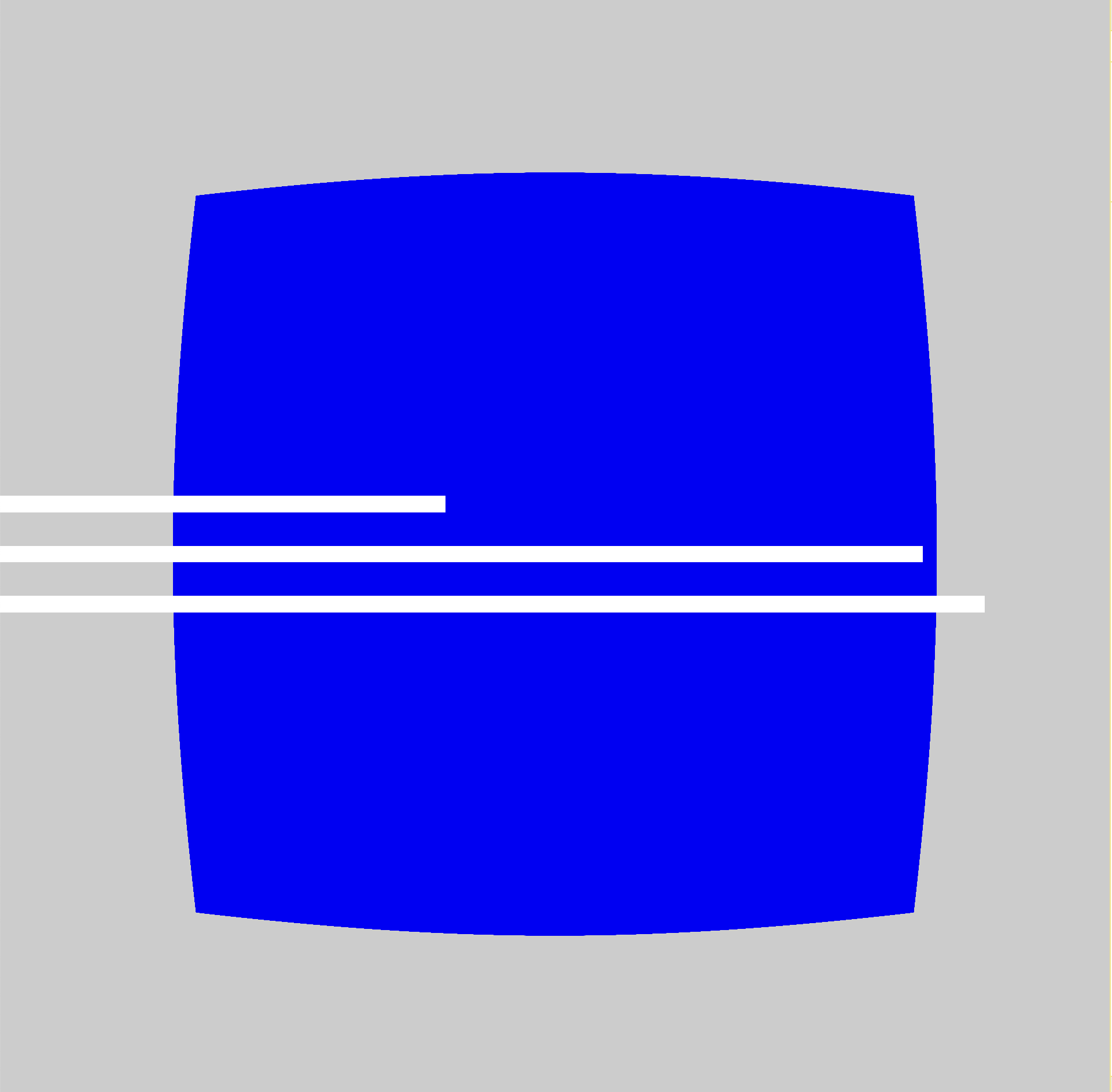 《qlock 1》NIINOMI | 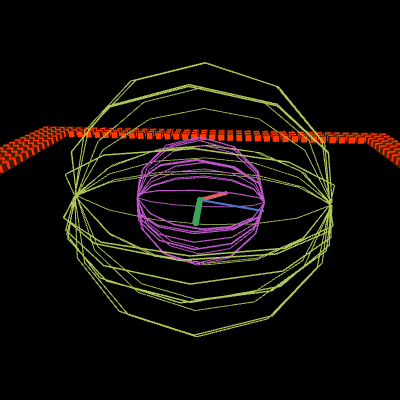 《clock sign》iwamoto |
Past Works at AxCROSS
Kaoru Tanaka, Blooming Letters (2024)
The opening artwork of AxCROSS. Centered on a bouquet generated from data collected in various places, paper airplanes spread across the sky to express the way people exchange messages. As symbols of "letter culture", the airplanes visualize each message reaching someone dear. Kaoru Tanaka is a generative artist who creates installations and digital art with real-time rendering in TouchDesigner.

Blooming Letters, installation view — Press release
Hirai, A Miniature Garden of Things (Sent | Carried | Received) (2025)
Selected through OPEN CALL 2025 and unveiled for the first anniversary of KITTE Osaka. The work is a real-time artificial-ecosystem simulation that overlays the network of mail connecting distant people with the way insects carry pollen and weave genetic networks between plants. Messages sent via QR code are converted into the genetic data of flowers, and the ecosystem keeps evolving in sync with the weather in Osaka. Hirai is a technical artist, researcher, and filmmaker who creates a body of "artificial ecosystem" works grounded in artificial life research.

A Miniature Garden of Things (Sent | Carried | Received), installation view — Press release
Application Period
Jun 17, 2026 ~ Jul 16, 2026 23:59 JST ⏰ Deadline Extended: July 23 (Thu), 23:59 JST
Selection
- Number of selected works: 5
- Jury: NEORT and the AxCROSS operation team
- Announcement: Late July 2026 (selected artists will be contacted by NEORT)
Exhibition Period
Aug 1, 2026 ~ Oct 31, 2026
Note: The exhibition period is subject to change.
Exhibition Location
- Name:AxCROSS
- Zip Code:〒530-0001
- Address:KITTE OSAKA 4F, 3-2-2, Umeda, Kita-ku, Osaka-shi, Osaka
- Hours of Operation: Follow the business hours of KITTE Osaka
- Screen Size: W18,000mm x H2,500mm


Display Method
- Projection on an W18,000mm x H2,500mm wall using five projectors
- Repeatedly displayed throughout the period
- Projection image

Application Guidelines
- Only works that run in real time in a web browser are eligible (JavaScript, GLSL, or any code-based format that can be posted to NEORT).
- Video and image files are not eligible.
- Create your work in one of the following screen formats:
- ① Window-size responsive (recommended)
A work that adapts to the display area and fills the entire screen (8950 × 1080px, ultra-wide). - ② 16:9 (horizontal)
Works made at 16:9 will be tiled side by side across the screen, as shown below.
- ① Window-size responsive (recommended)
- Size
Item Details Format Web-based work (JavaScript / GLSL etc.) Screen Size Window-size responsive (16:9 also acceptable) - Works will be placed and screened within the screen (8950px x 1080px). The layout will be arranged by the operation team
How to Participate
- Submit your work to NEORT with the
Clock_Challegetag
Notes
- If a work is deemed unsuitable for exhibition, such as a work offensive to public order and morals or suspected of copyright infringement, it may not be included in the exhibition.
- Depending on the contents of the submitted works, the exhibition method may be arranged.
- You agree that the AxCROSS operation team may use photos and videos related to your work for the promotion of the space.


