Exhibition
NEORT presents artworks displayed on digital signage throughout the city.
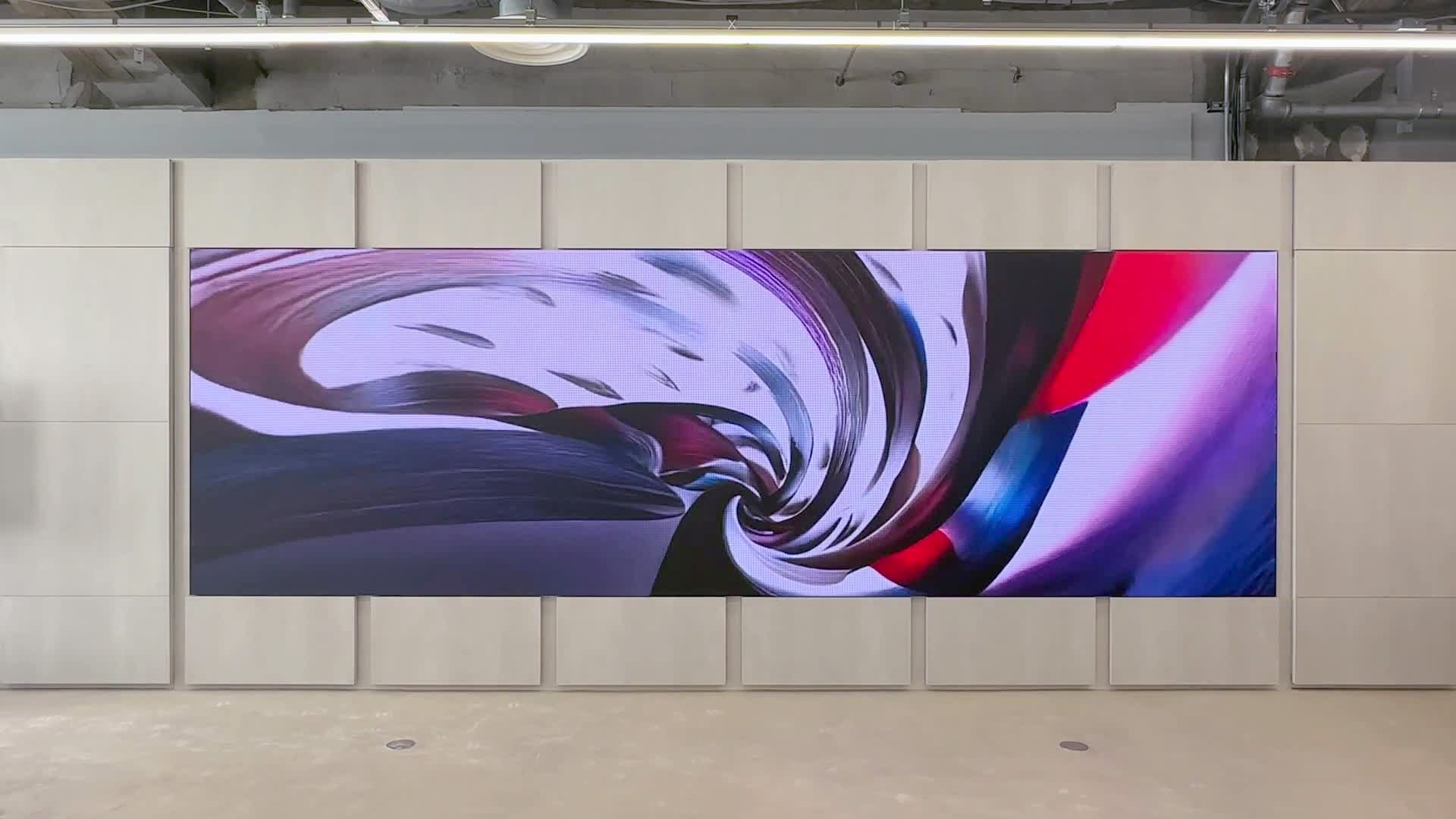
Seiwa Business, an office space design company, is holding an open call on neort.io for digital artworks to be displayed at their satellite office, UN:O. Ten selected works will be showcased on the LED screens.
| Artist | David Seven, Chayapon Puapaiboonwong , m5, Watataku | デジタルアーキテクト(Digital Architect), Hiroki Oka, USB, HiiRO, Alvis lee |
| Space | UN:O |
| Period | 2025.10.17 -2026.10.17 |
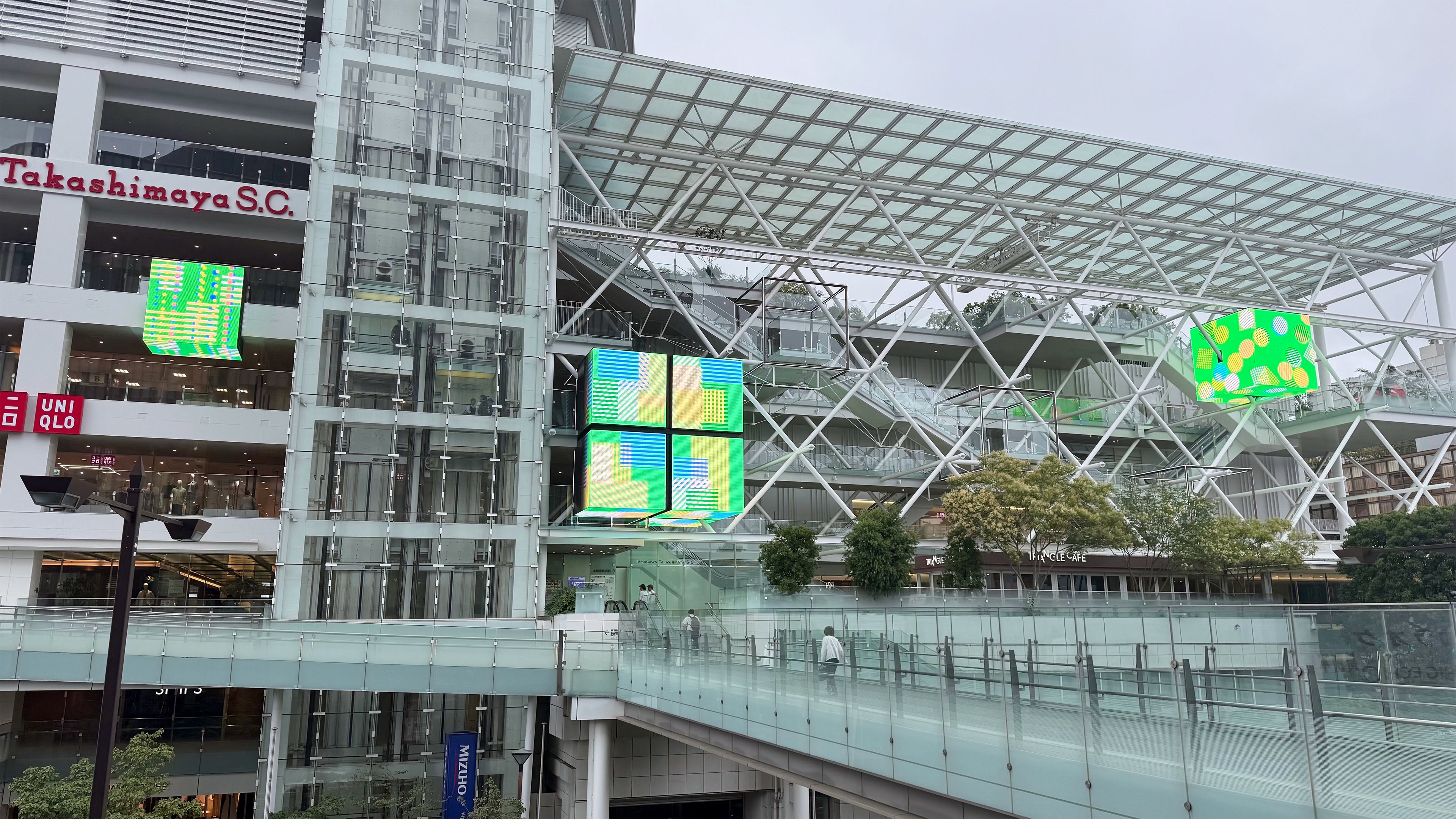
This motion graphics piece using moiré was created for the Tamagawa Takashimaya S.C. Cube. It was produced with reference to Op Art, capturing the imagery of Futako-Tamagawa where the river, greenery, the city, and people intersect. Through the use of moiré, various images such as the flow of the river, the blowing wind, the bustle of people passing by, and fashion overlap with one another.
| Artist | 大橋史|Takashi Ohashi |
| Space | 玉川高島屋S.C. LEDキューブ |
| Period | 2026.6.30 -2026.9.15 |
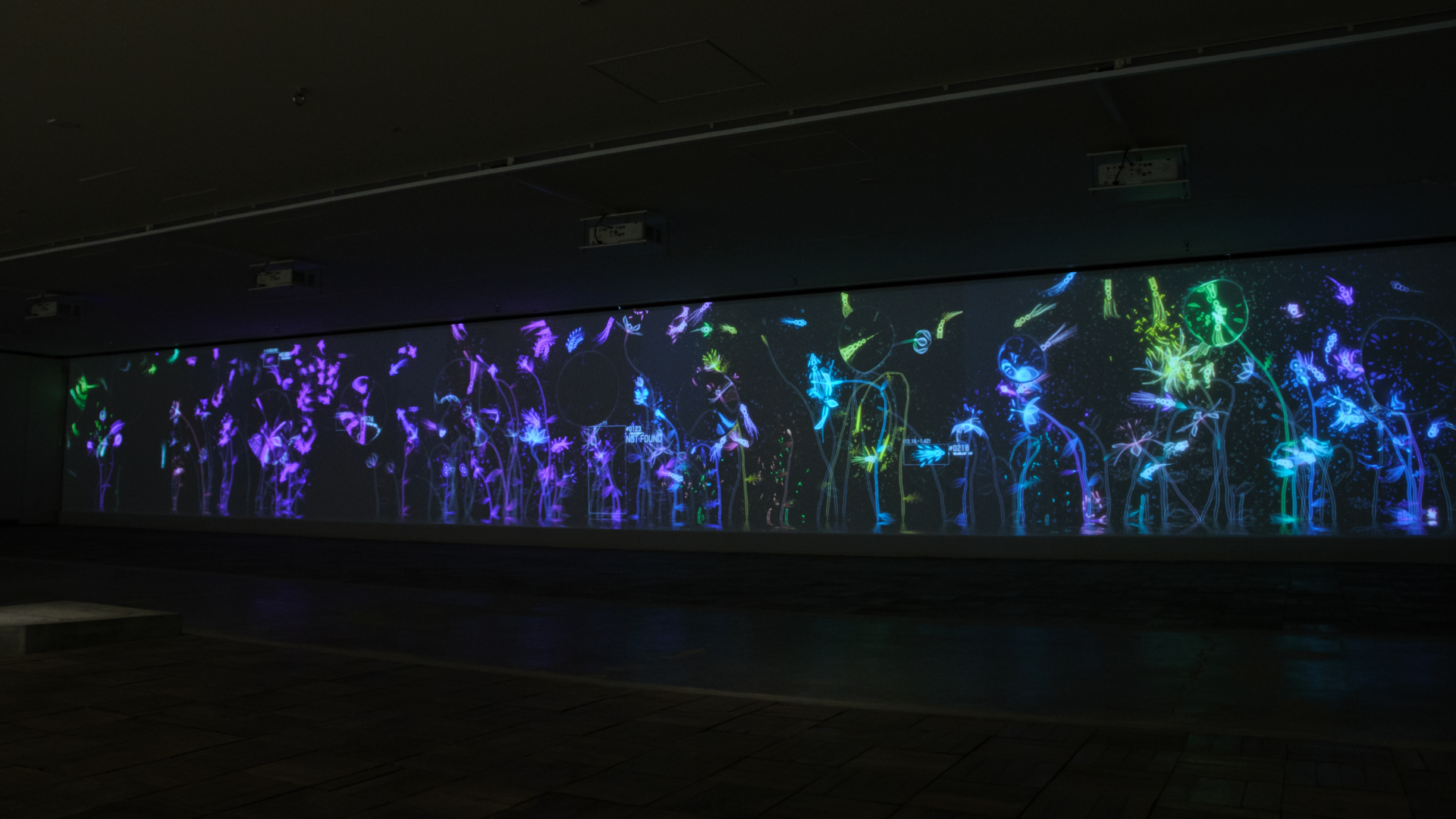
Since its opening in July 2024, the large AxCROSS screen on the 4th floor of the former Osaka Central Post Office Preservation Building at KITTE Osaka has been continuously broadcasting information and digital art under the concept of "A place for weaving connections." As we approach our first anniversary this year, AxCROSS aims to evolve into "A place where history and new culture can be felt," and to achieve this new step, we publicly invited submissions for new digital art. As a result of rigorous screening, we have decided to adopt Mr. Hirai's proposal this time. This work is a real-time generated artificial ecosystem simulation that overlays the relationship between humans and postal services onto the ecological relationship between insect-pollinated flowers and insects. It maximizes the use of AxCROSS's characteristic large screen, which is approximately 18 meters in length, to create an interactive expressive space where visitors can experience it life-sized.
| Space | AxCROSS |
| Period | 2025.7.31 -2026.7.30 |
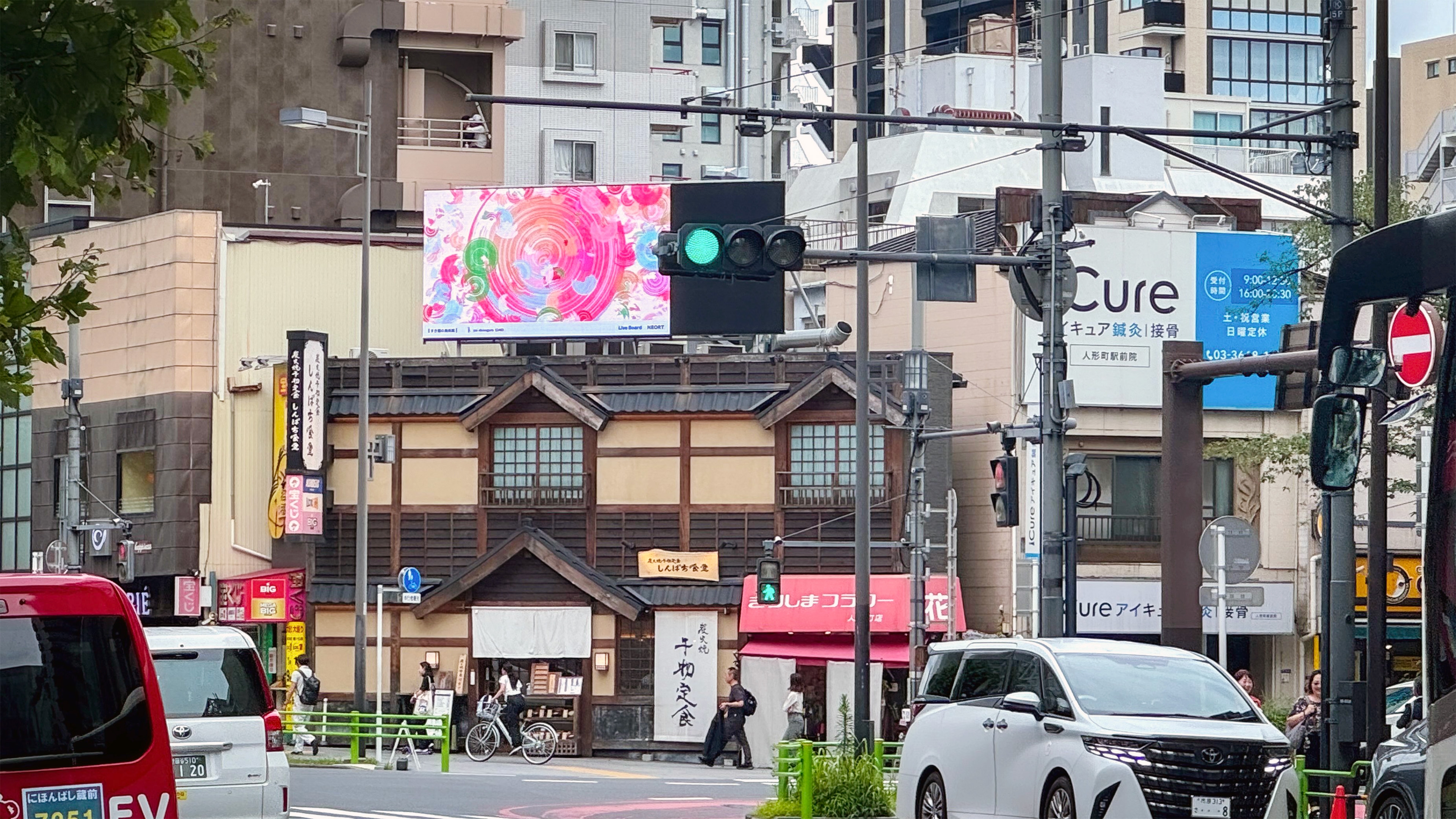
"Interstitial Museum" is a collaborative project between LIVE BOARD, INC. and NEORT, where digital art is broadcast during the gaps between advertisement slots. This initiative explores a new form of experience where art blends seamlessly into the city.
| Artist | Kakuya Shiraishi, レオル, uesən, mao tada, yui shinogura, 黒狐, Samuel YAN |
| Space | LBオウンドメディア |
| Period | 2026.6.17 -2026.7.16 |
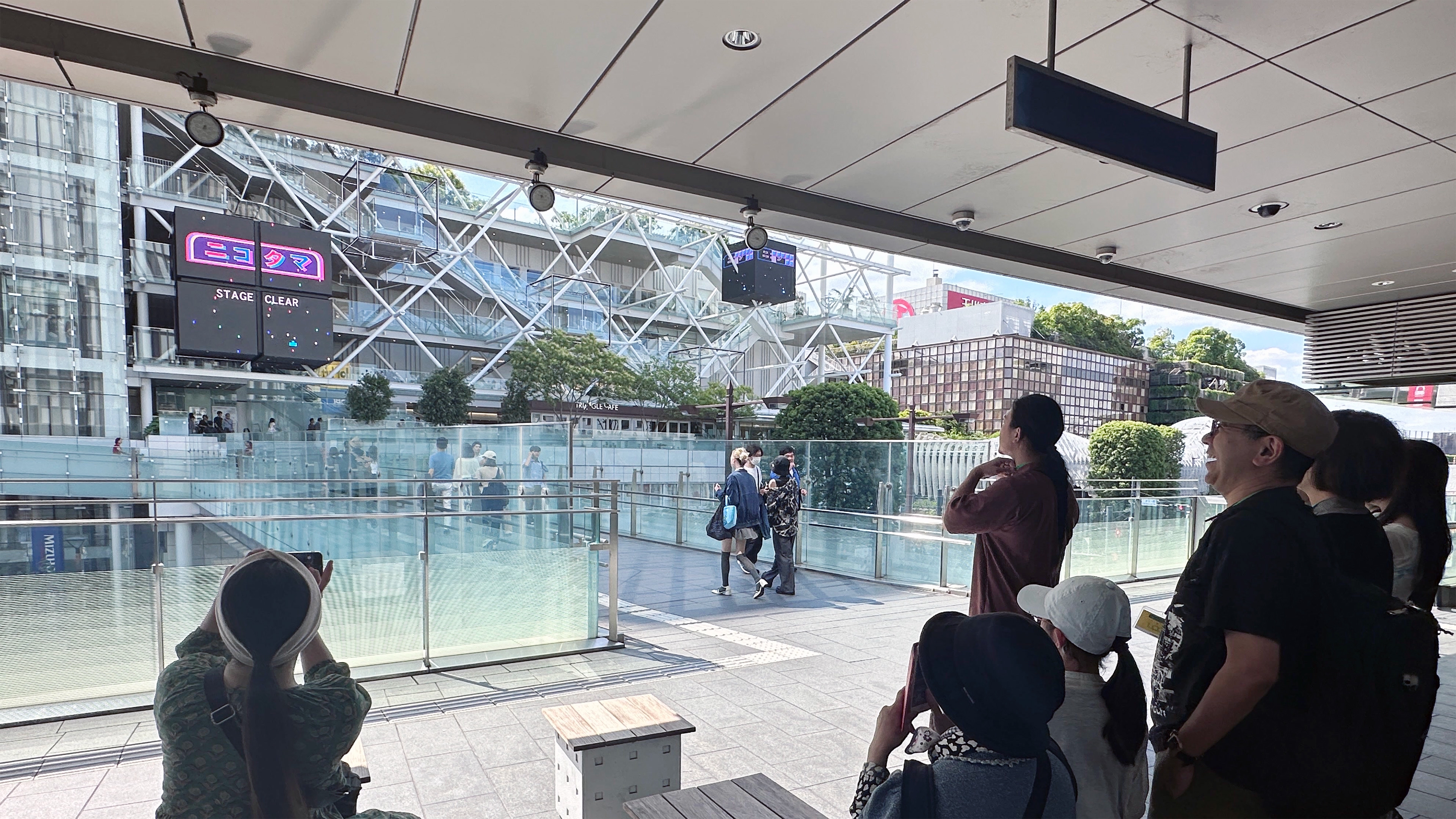
Last year, the generative art workshop held at the LED Cube in the Tamagawa Takashimaya S.C. South Building captured the attention of many participants and visitors. The sight of the created artworks being broadcast and rising up in three dimensions as part of the cityscape generated a significant response. This initiative, which is open to everyone, will be held again this year. With artist and creative coder Okazz as the instructor, participants will engage in creating generative art that makes the most of the unique shape and spatiality of the LED Cube.
| Artist | chimanaco, Yousuke Matsuura, Takumi Tajima, Senbaku, nawoki, k-ogi(QumiiKo), nzm sd, annin🥛 | Aino Kishimoto, Sumi, izumi, Luna, wowowl |
| Space | 玉川高島屋S.C. LEDキューブ |
| Period | 2026.6.7 -2026.7.5 |
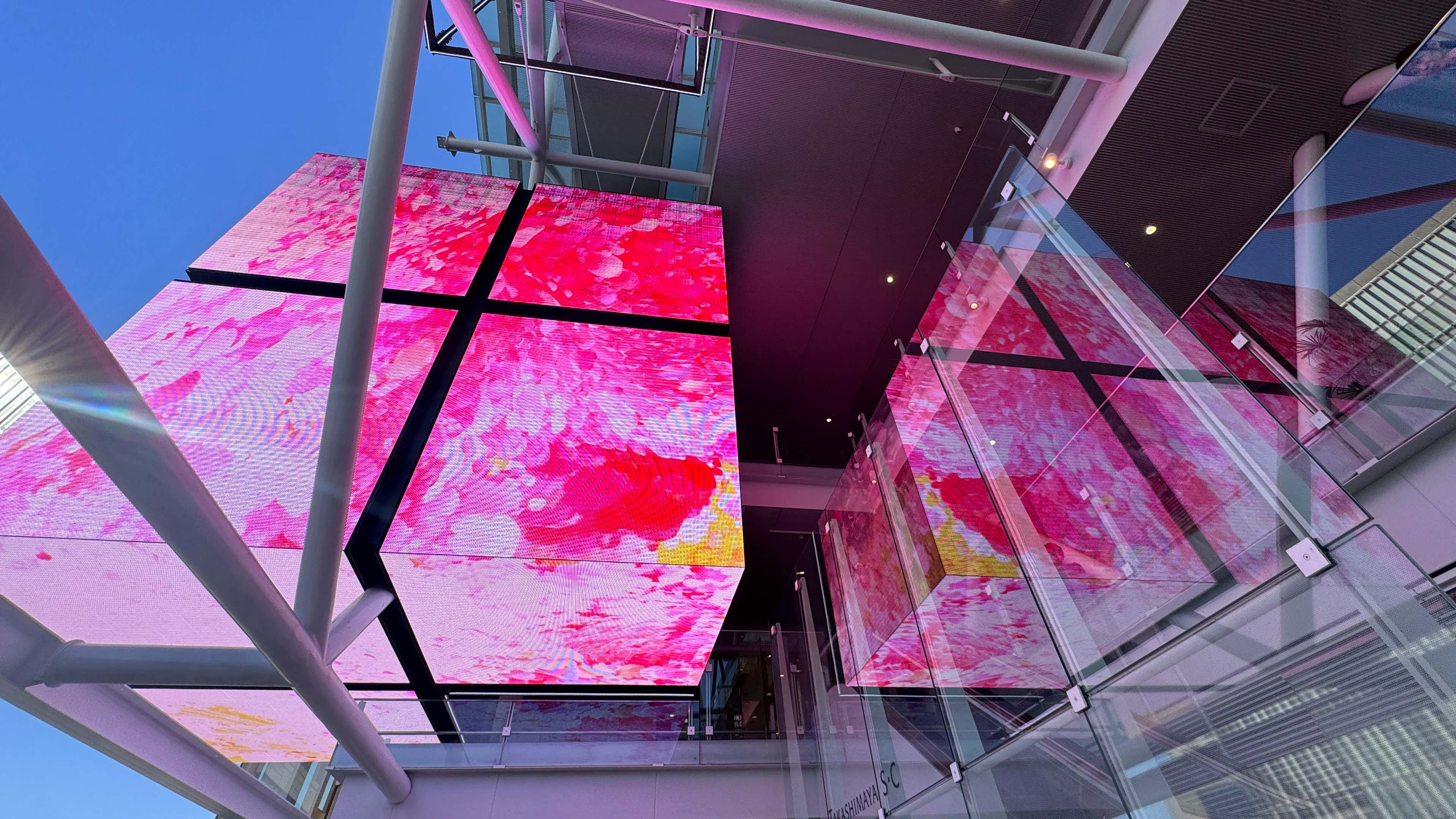
| Artist | kaoru |
| Space | 玉川高島屋S.C. LEDキューブ |
| Period | 2026.4.3 -2026.6.30 |
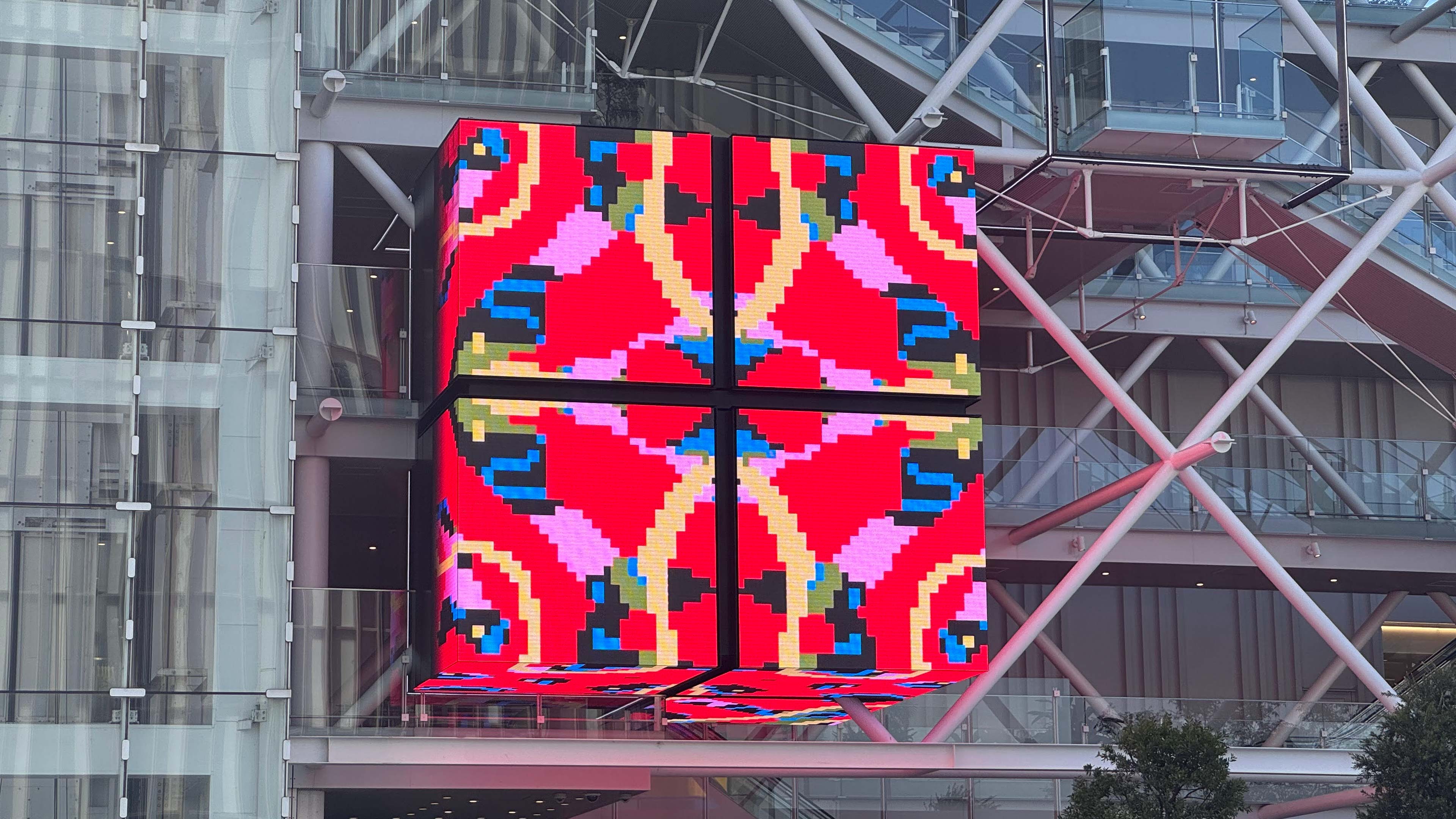
| Artist | seohyo |
| Space | 玉川高島屋S.C. LEDキューブ |
| Period | 2026.4.3 -2026.6.16 |
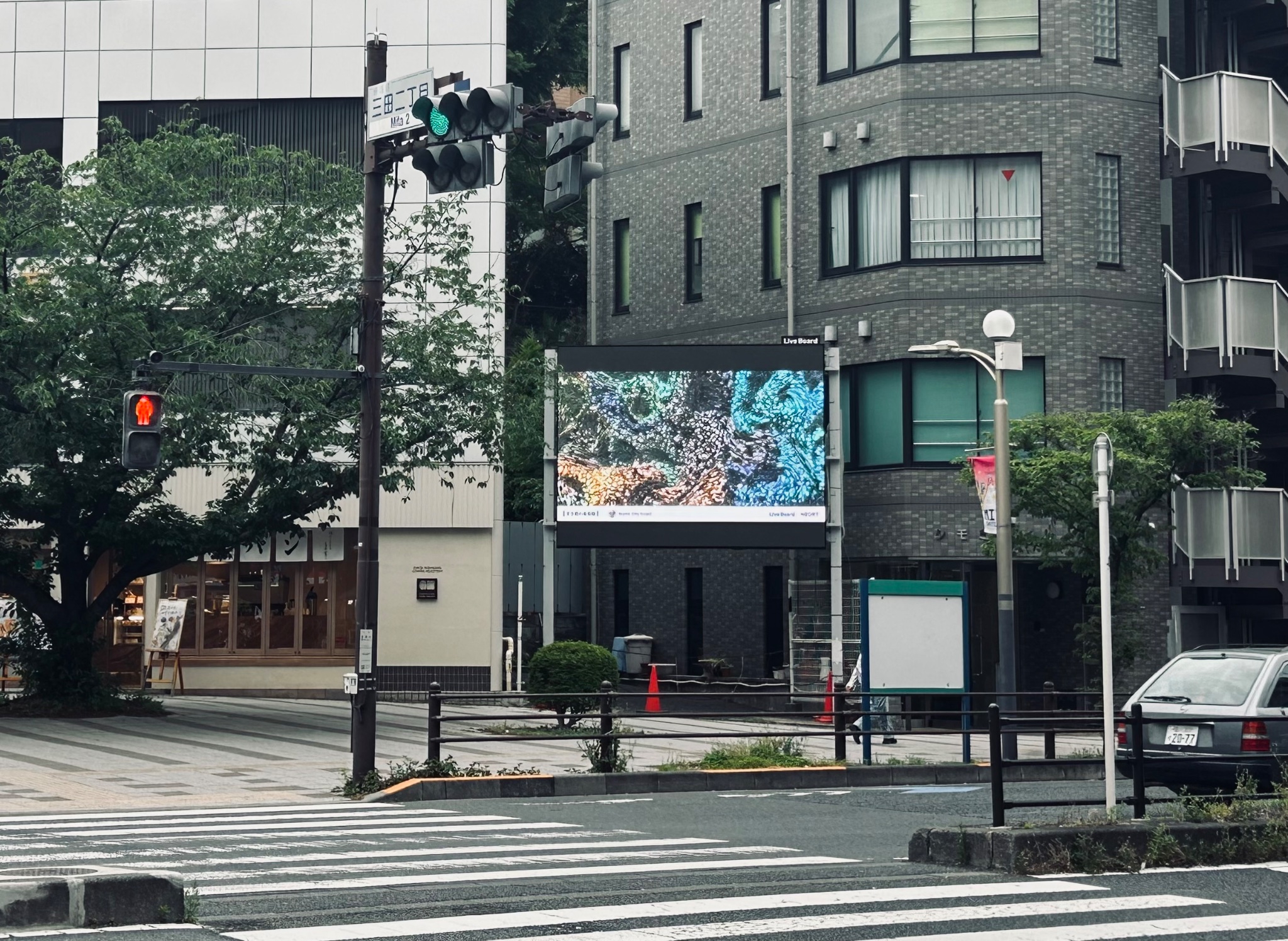
"Interstitial Museum" is a collaborative project between LIVE BOARD, INC. and NEORT, where digital art is broadcast during the gaps between advertisement slots. This initiative explores a new form of experience where art blends seamlessly into the city.
| Artist | Chayapon Puapaiboonwong , Martin Lukas Ostachowski / MLO.art, ayat, Nsyme |
| Space | LBオウンドメディア |
| Period | 2026.4.22 -2026.6.16 |
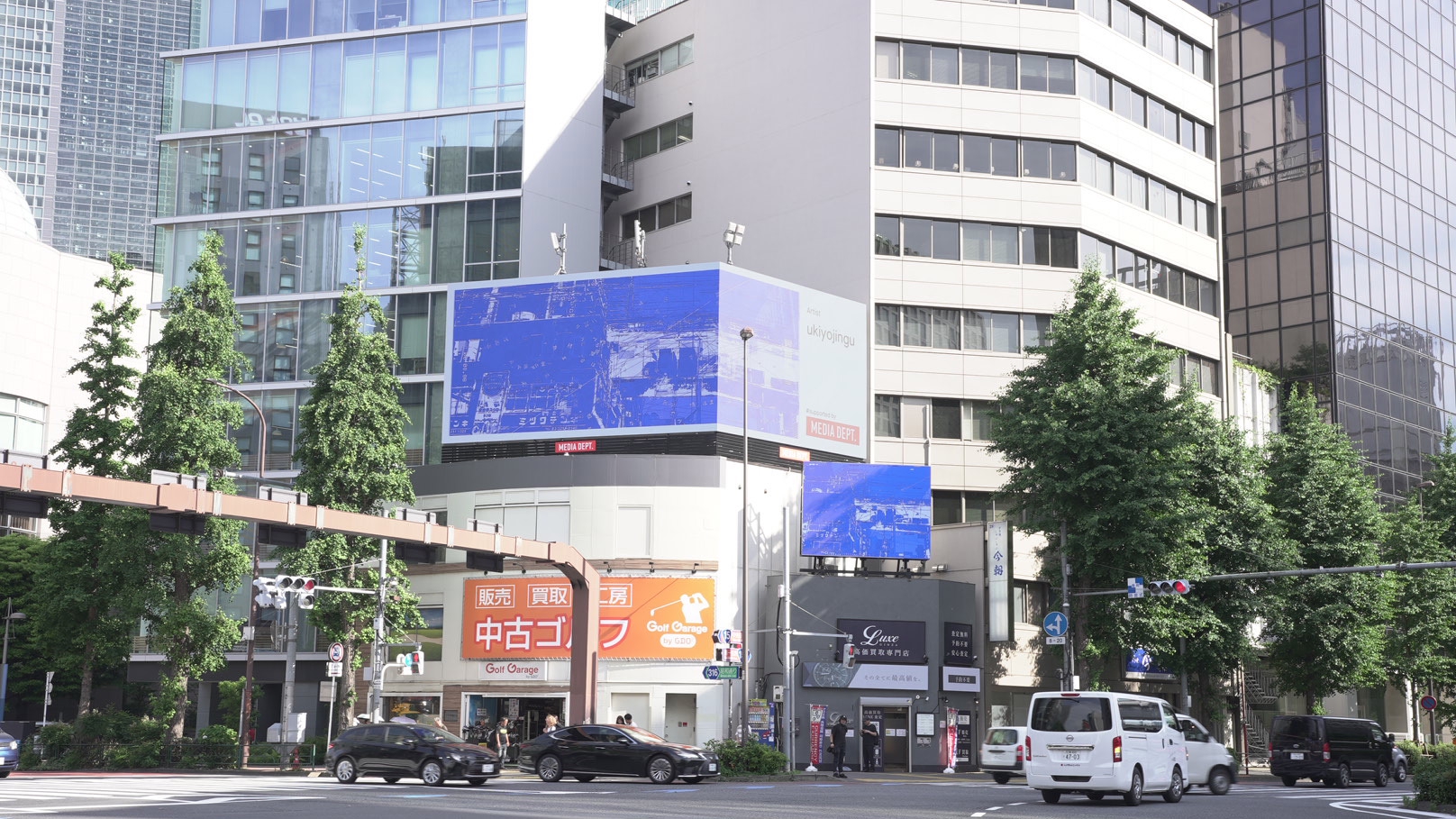
MADE FOR THIS CITY -TOKYO- is an international digital art open call organized by Artcrush and NEORT, using the outdoor signage of Tokyo (Ginza, Shibuya, Harajuku, and Omotesando) as its stage to invite works on the theme of "TOKYO." By transforming signage from a "surface for selling" into a "surface for feeling," and through works created specifically for each place, artists from Japan, Belgium, and beyond engage with the city of Tokyo. Following the open call (April 28–May 12), a total of 14 works will be selected and exhibited in June 2026, divided into two phases.
| Artist | Saeko Ehara, rapha mey ▫️🗽, Man-Kha27, Miss Dew, ayat, ukiyojingu, Yuta Aoki |
| Space | DIGITAL BILLBOARD+ GINZA 3D |
| Period | 2026.6.1 -2026.6.14 |
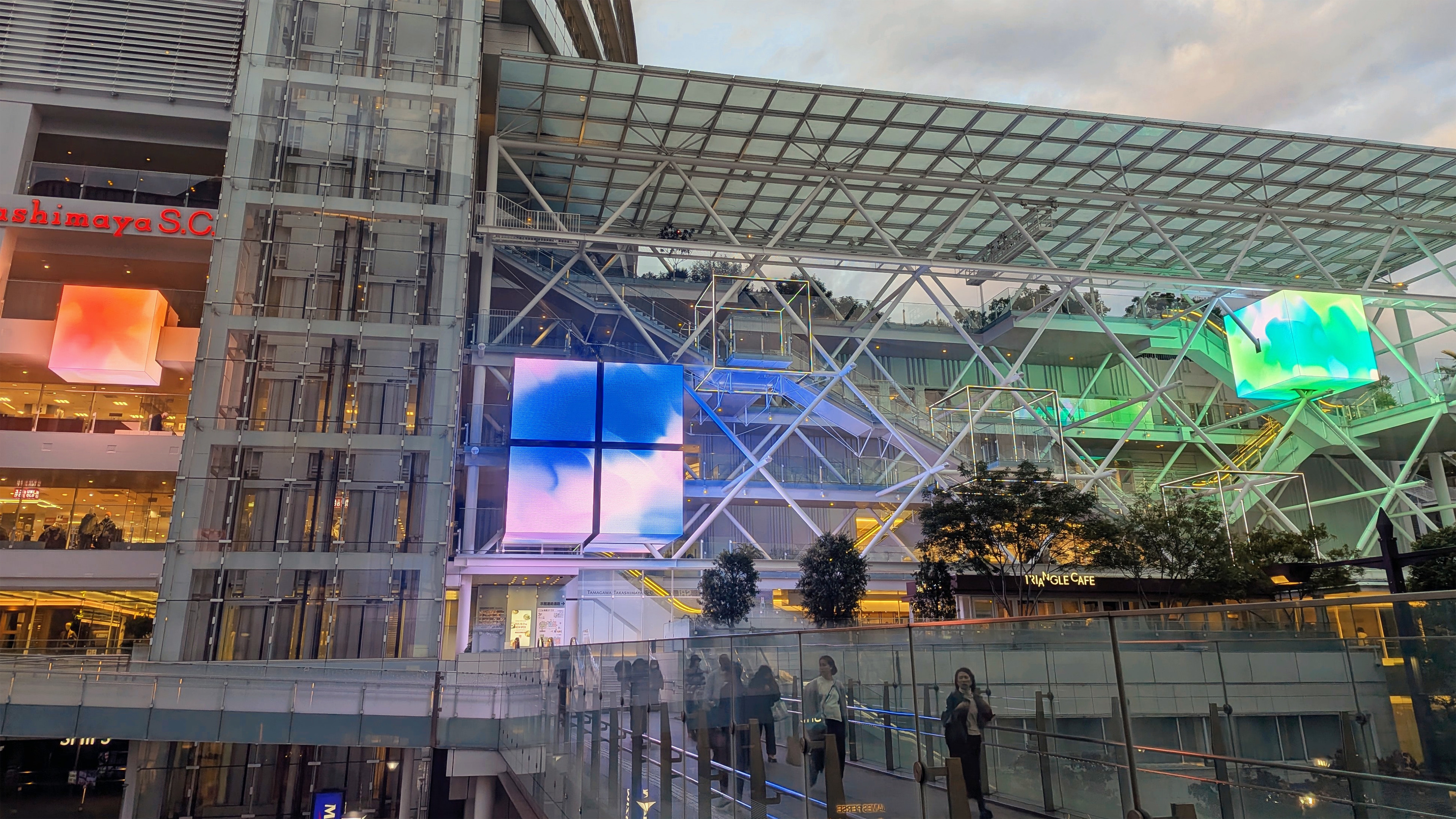
This artwork is themed around the interplay of light and air that drifts through the city of Nikotama. It captures the gentle moments found amidst the wind from the Tama River and the layers of light reflecting and shimmering on buildings. The softly shifting colors express the daily changes in the air and the transitions of sunlight.
| Space | 玉川高島屋S.C. LEDキューブ |
| Period | 2025.11.1 -2026.3.31 |
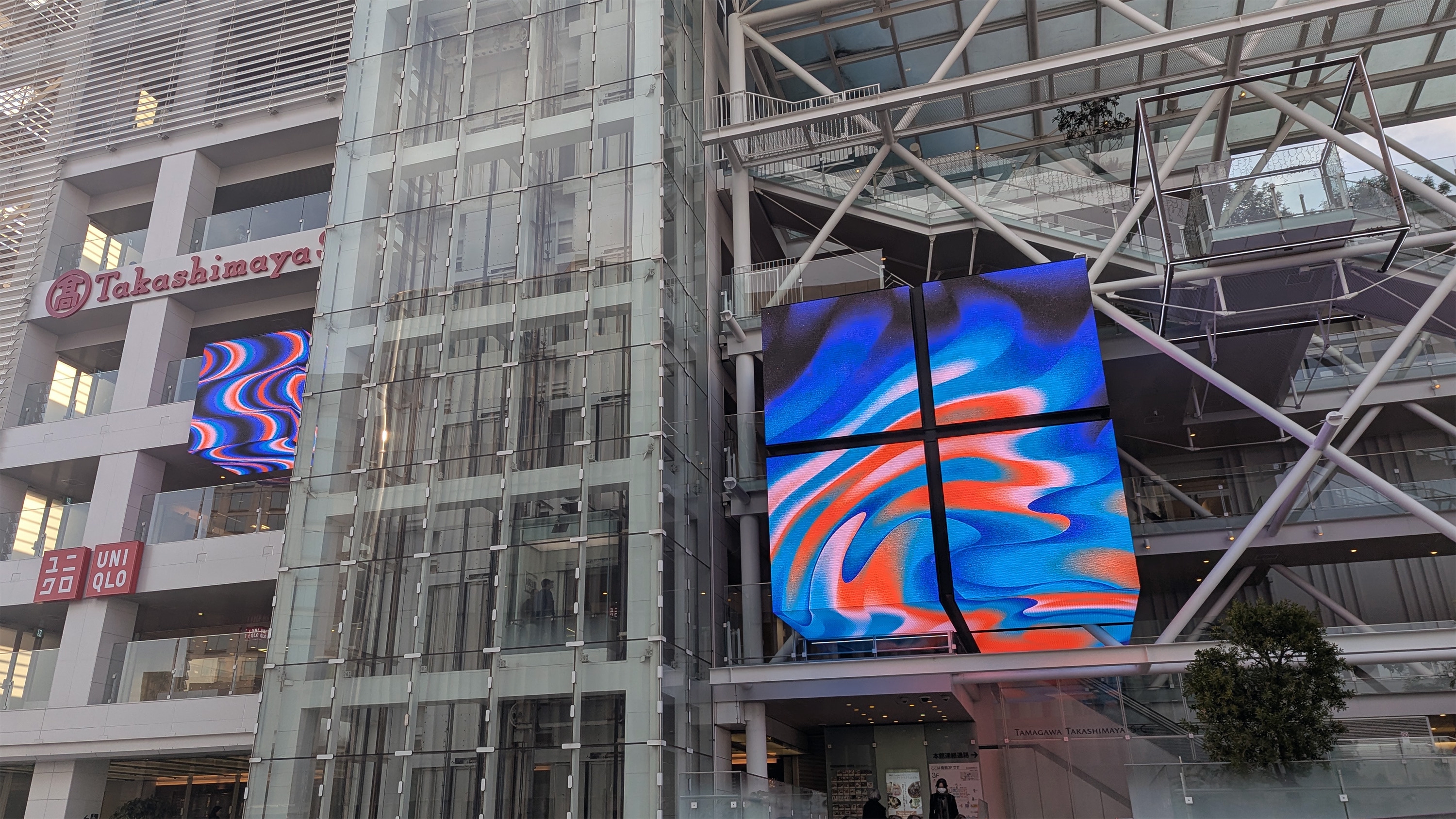
A Risograph animation created with the themes of sunrise and melting snow. Solid visuals transform into melting-like visuals as they are illuminated by a sphere mimicking the sun. The inspiration came from the image of people visiting Tamagawa Takashimaya, whose feelings and appearances change between arriving and leaving after shopping. When the unique texture of Risograph is projected onto a giant LED screen, viewers can appreciate the paper's texture and the ink particles. This creates an organic sense of high resolution, different from the smooth, beautiful, and noise-free images typically seen with high-pixel displays.
| Space | 玉川高島屋S.C. LEDキューブ |
| Period | 2026.1.5 -2026.2.28 |
As part of the "SCREENS CONTEXTUALIZED" initiative, we are holding an OPEN CALL to open up the signage within MIYASHITA PARK as a space for digital art expression. By utilizing the large-scale signage network deployed within the commercial facility, we offer artists from around the world an opportunity to challenge new possibilities for expression in urban spaces. The selected works will not only be broadcast during DIG SHIBUYA but will also be continuously utilized as public art, with the premise of regular display at MIYASHITA PARK in the future.
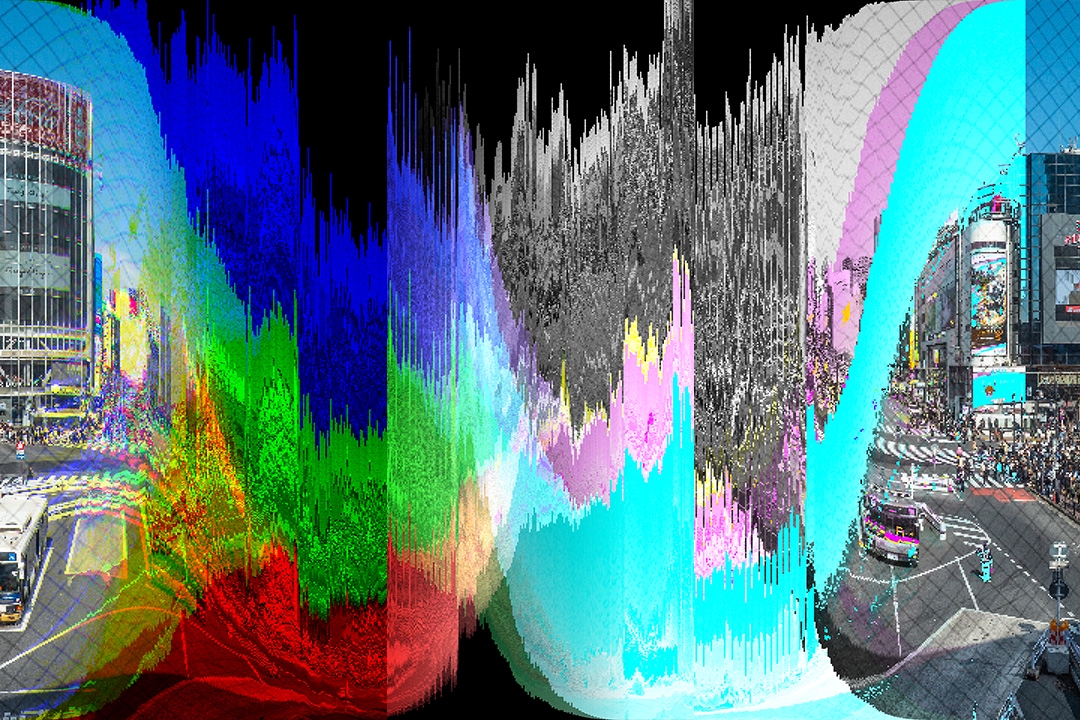
In multicolor woodblock printing, separate blocks are prepared for each color, which are then overprinted in sequence starting from the lightest tones. This work follows that process and is composed of a central piece and its derivatives, all generated through the decomposition and reconstruction of a landscape by color. The layering inherent in multicolor printing is understood here not merely as a technique, but as a structural model that suggests how the world itself is formed. Tokyo’s Shibuya, an urban space where multiple layers of time and culture continuously intersect, is likened to the three-dimensional structure of multicolor woodblock printing. Using this analogy as a conceptual foundation, the imagery is developed into an algorithmic system written in code. By embracing the accumulation of time, culture, and emotion, as well as the element of chance that emerges from their interaction, the work presents an alternative landscape shaped through this process.
| Space | MIYASHITA PARK LEDビジョンタワー |
| Period | 2026.2.9 -2026.2.22 |
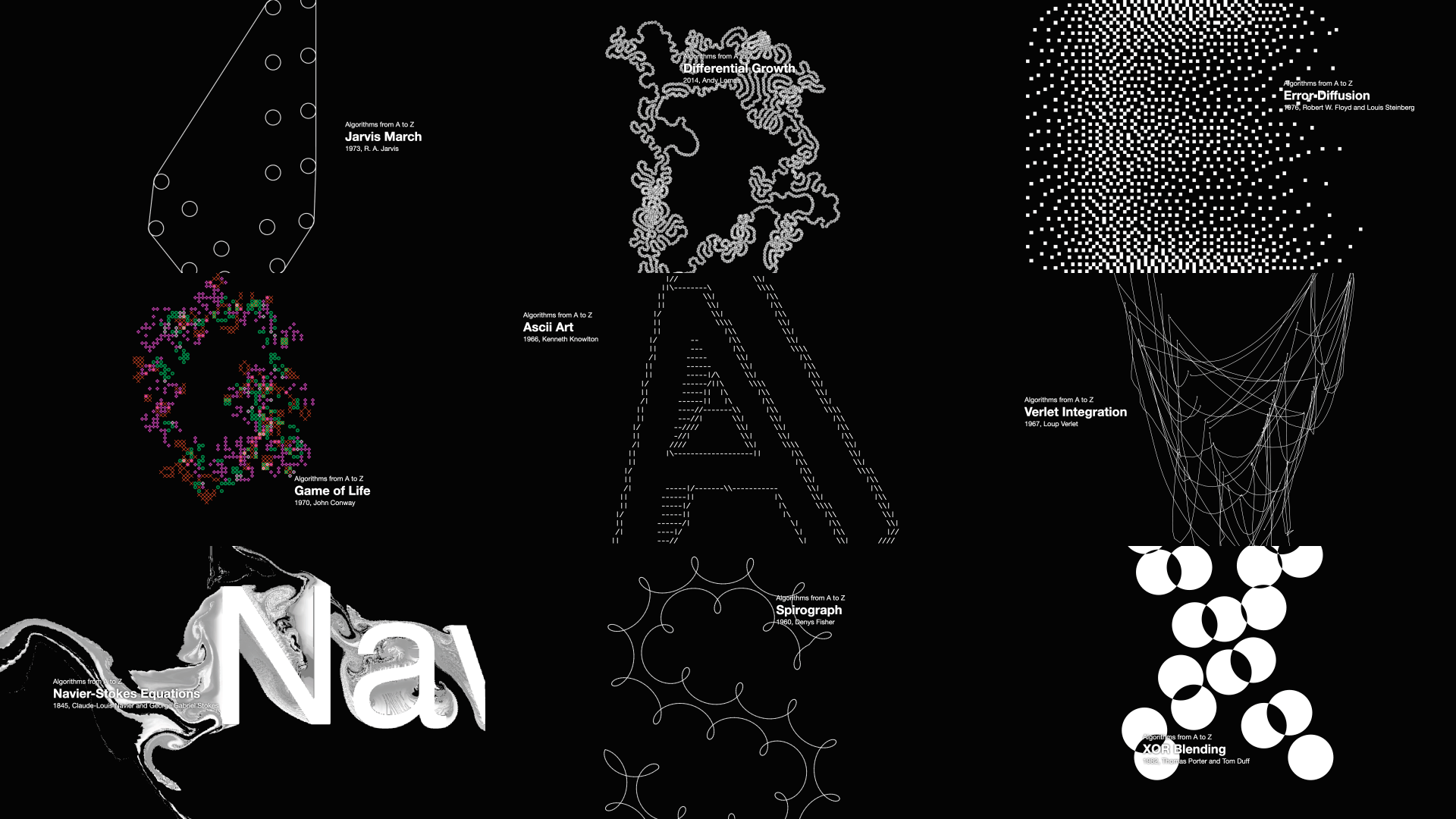
I searched for algorithms whose names begin with each of the 26 letters from A to Z and used them to create kinetic typography driven by those algorithms. Since the emergence of NFTs, generative art as a genre has been re-evaluated. Although I have been creating works through coding for many years, I often find myself unsure how to answer the question, “What is generative art?” At the core of generative art lies the algorithm. While it is of course possible to create one’s own, many algorithmic masterpieces already exist. In this work, I reimplemented those algorithms in JavaScript. Through this process, I reflect on the appeal inherent in coding and algorithms themselves, independent of distinctions between art and design. By placing emphasis on process, something that tends to be overlooked in the age of AI, this project attempts to reconnect with the pleasure of implementation itself. https://kitasenjudesign.com/atoz/
| Space | メトロ改札口ビジョン(銀座線渋谷駅) |
| Period | 2026.2.8 -2026.2.15 |
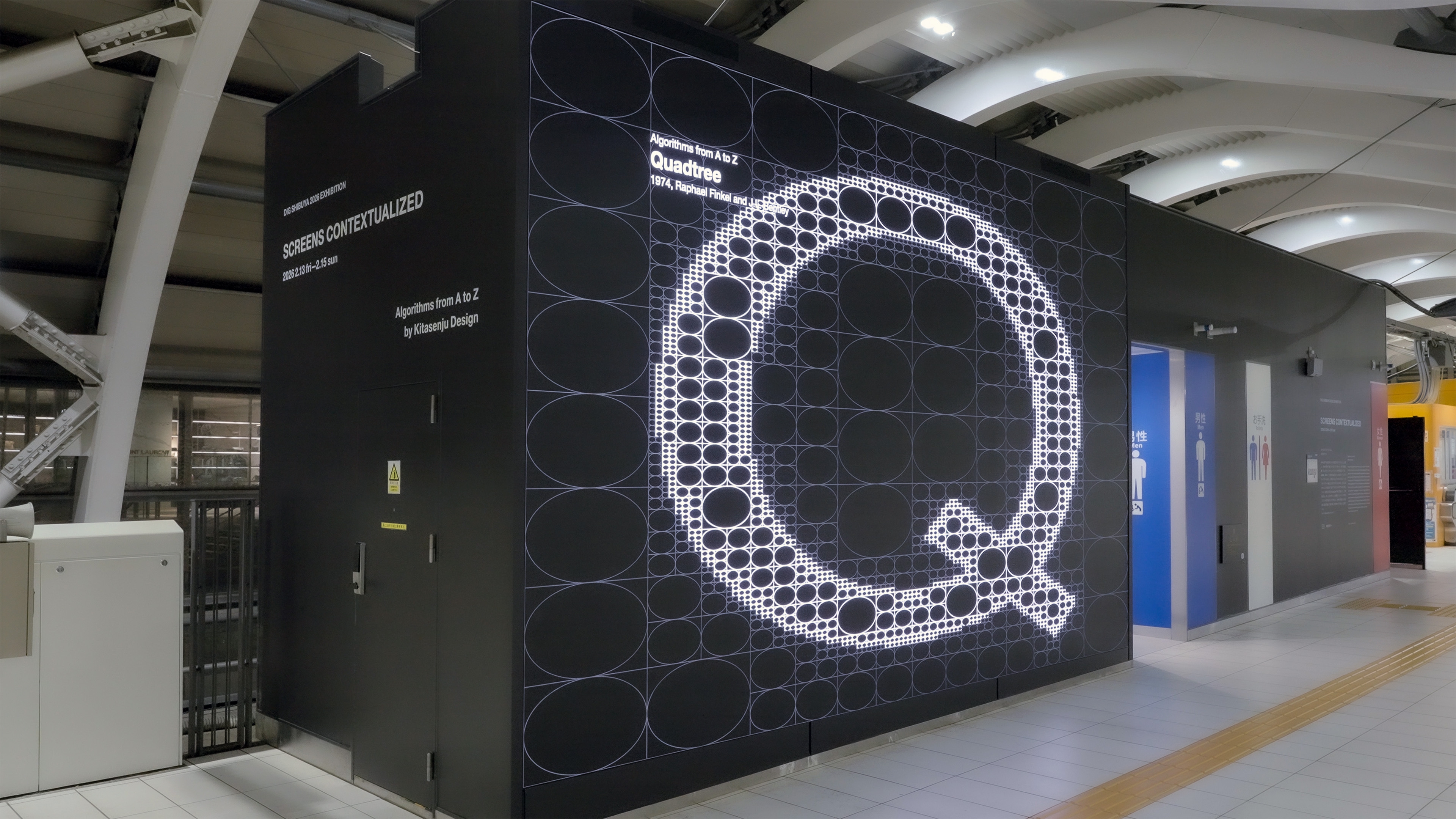
I searched for algorithms whose names begin with each of the 26 letters from A to Z and used them to create kinetic typography driven by those algorithms. Since the emergence of NFTs, generative art as a genre has been re-evaluated. Although I have been creating works through coding for many years, I often find myself unsure how to answer the question, “What is generative art?” At the core of generative art lies the algorithm. While it is of course possible to create one’s own, many algorithmic masterpieces already exist. In this work, I reimplemented those algorithms in JavaScript. Through this process, I reflect on the appeal inherent in coding and algorithms themselves, independent of distinctions between art and design. By placing emphasis on process, something that tends to be overlooked in the age of AI, this project attempts to reconnect with the pleasure of implementation itself. https://kitasenjudesign.com/atoz/
| Space | シブハコビジョン |
| Period | 2026.2.8 -2026.2.15 |
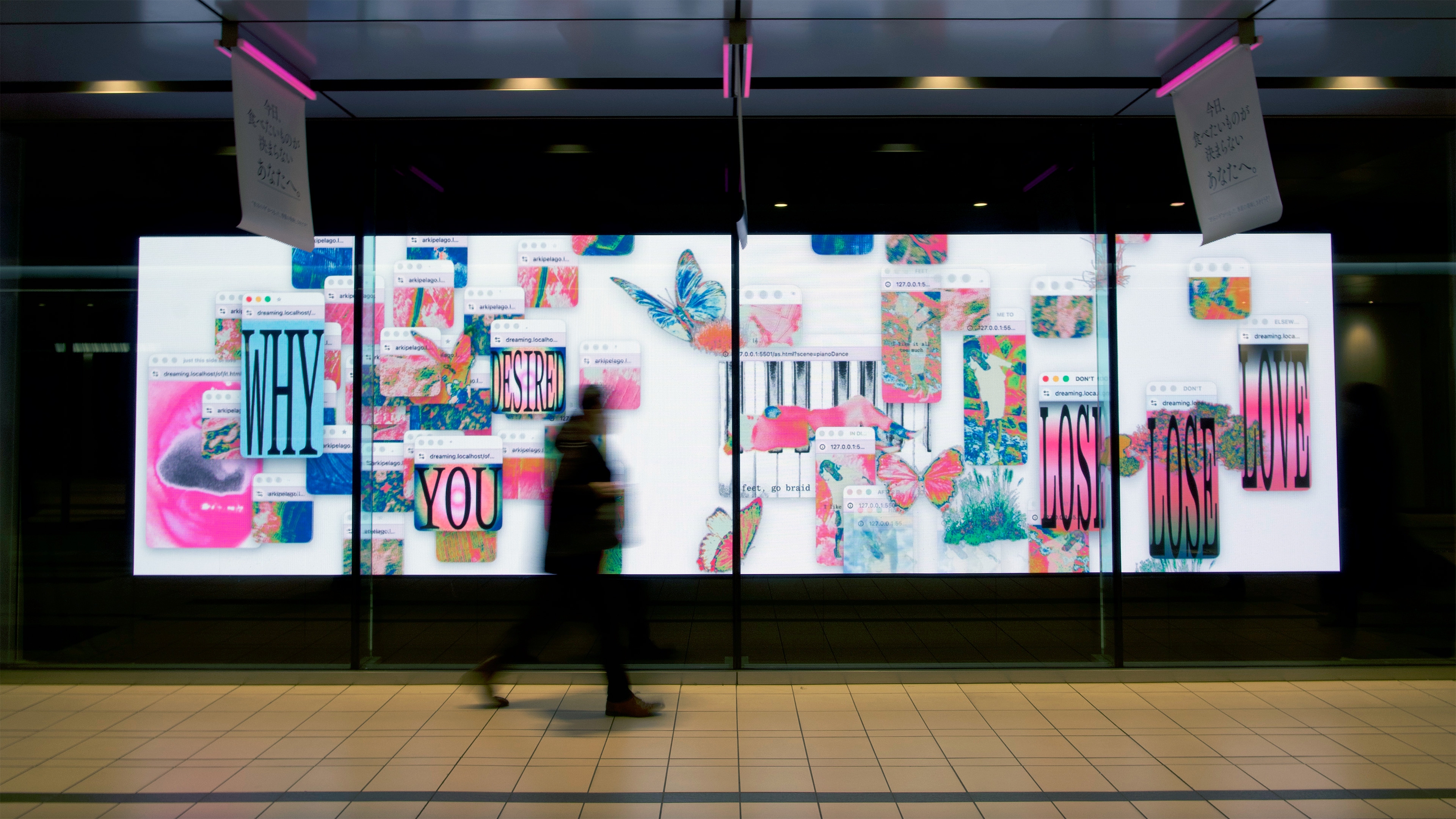
‘If you knew me, would you love me?’ presents Chia Amisola’s computer desktops from the past three years as sites of landscapes, intimacy, and poetry. The desktop–an accumulation of our identity and work, often a private space–instead becomes a space to consider how we might know and be known online. While technology today encourages algorithmic smoothness and seamlessness, Amisola returns to ‘hypertext’: non-linear, friction, and difficult forms of knowing that demand our attention and constant care. The artwork’s titular question reveals a hidden truth: only through the effort of attention does true connection become possible. The video compositions are collaged from Amisola’s custom browser-based software, recorded and performed by the artist as much as they are programs executed by the computer. Windows flood the desktop, containing small stories, anecdotes, and facts drawn from the artist’s upbringing in both the Philippines and internet. The text is heavily referential, fantastical, but also mundane; images are sourced from massive, impersonal repositories like Google StreetView, forums, and auction sites, reclaimed into handwritten fictions and memories. The desktop gestures towards technologies that might hold vulnerability and intimacy not for surveillance or extraction, but for connection – perhaps presenting ourselves online is just an asking to be loved.
| Space | ShinQs 2F 貫通通路LEDビジョン |
| Period | 2026.2.12 -2026.2.15 |
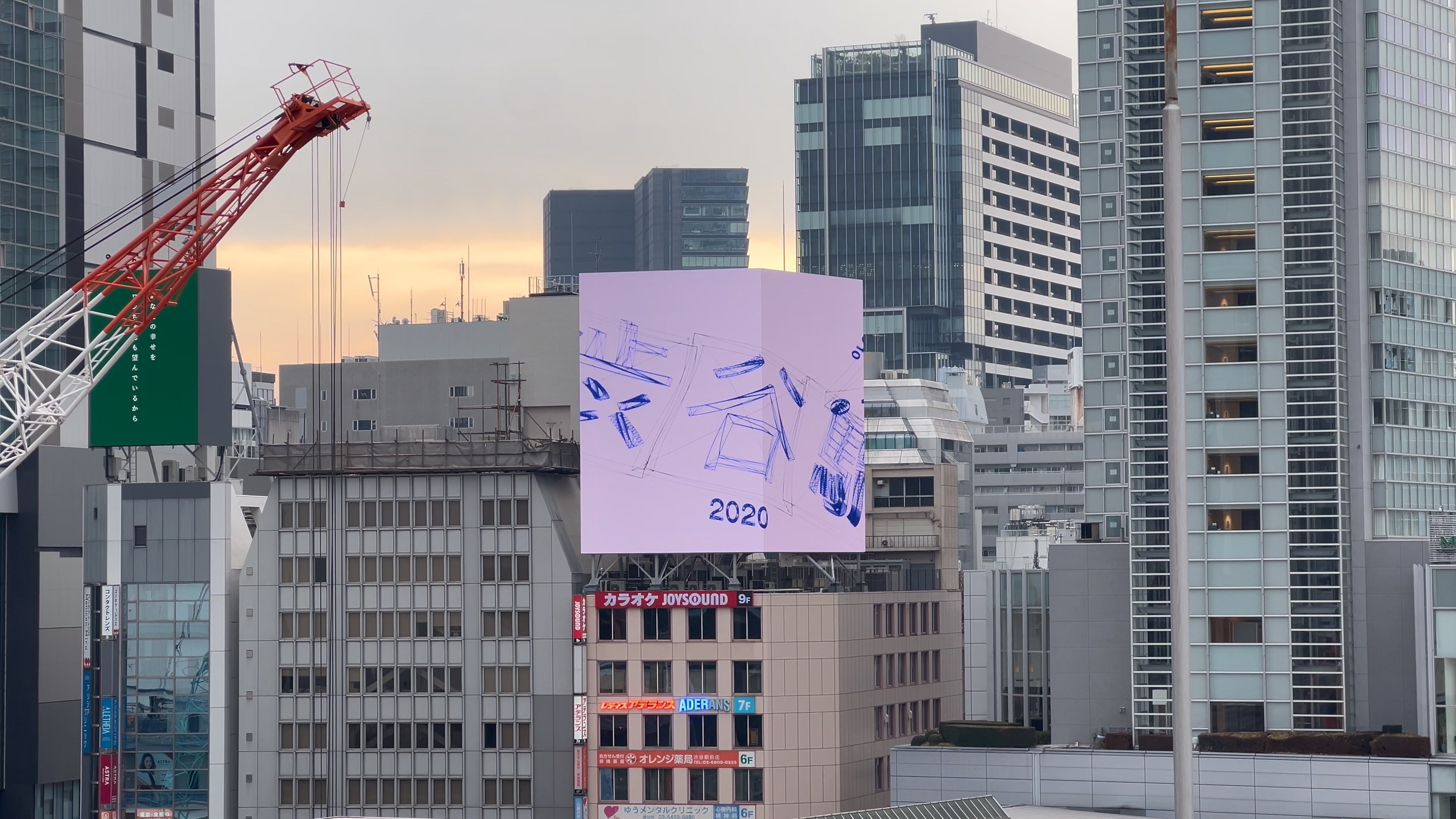
This piece serves as a memorial to billboards, some enduring in real-world spaces, others reduced to mere pixels haunting the digital ether.
| Space | 渋谷西口ビジョン |
| Period | 2026.2.12 -2026.2.15 |
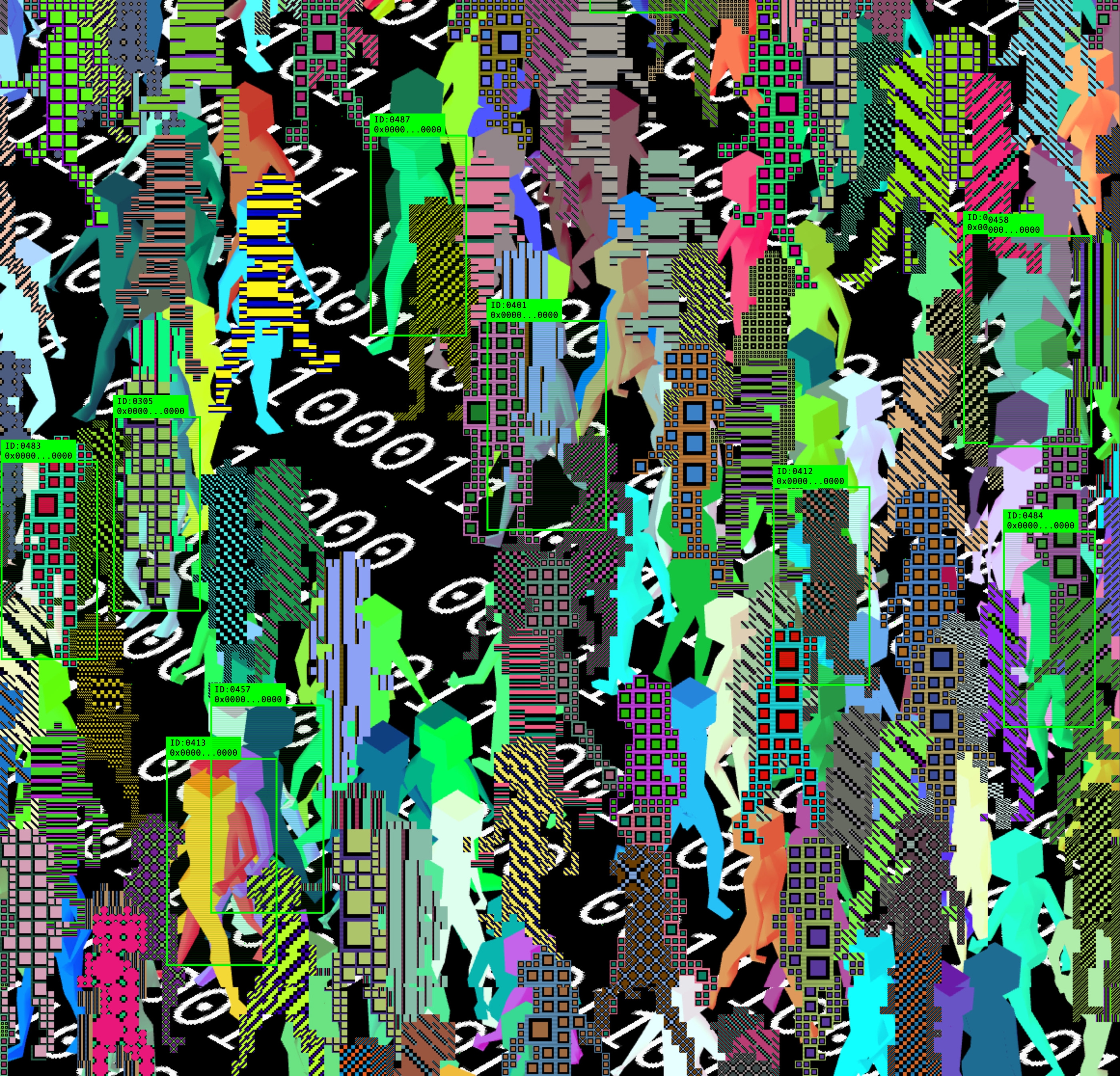
Once free, our world has drifted toward a mass surveillance system. Corporations, states, and communities are now driven by the same obsession: tracking everyone, anytime. In such an environment, I believe there is an inherent desire within any individual to exist for and within themselves. A desire to escape the statistical determination of a behavioral model imposed on everyone in order to control crowds, similar to a pack of things, not a group of beings. A strong desire for intimacy, in reaction to technological omniscience, will thrive in secret, shadowed by strong encryption. Whether in the streets, over the internet, or in all our communications, we face this global surveillance network. This is the new reality we need to question in order to redefine what it means to exist as an individual in the 21st century. Here, once encrypted, the character is no longer tracked and presents a much more graphical aspect. The more people in this crowd are encrypted, the harder it becomes to identify separate characters. They all end up merged into a graphical matter, while each keeps their singular visual identity. Privacy is a human right, and this fight requires collective awareness.
| Space | KEIO MIRARERU VISION(渋谷メガウォール) |
| Period | 2026.2.13 -2026.2.15 |
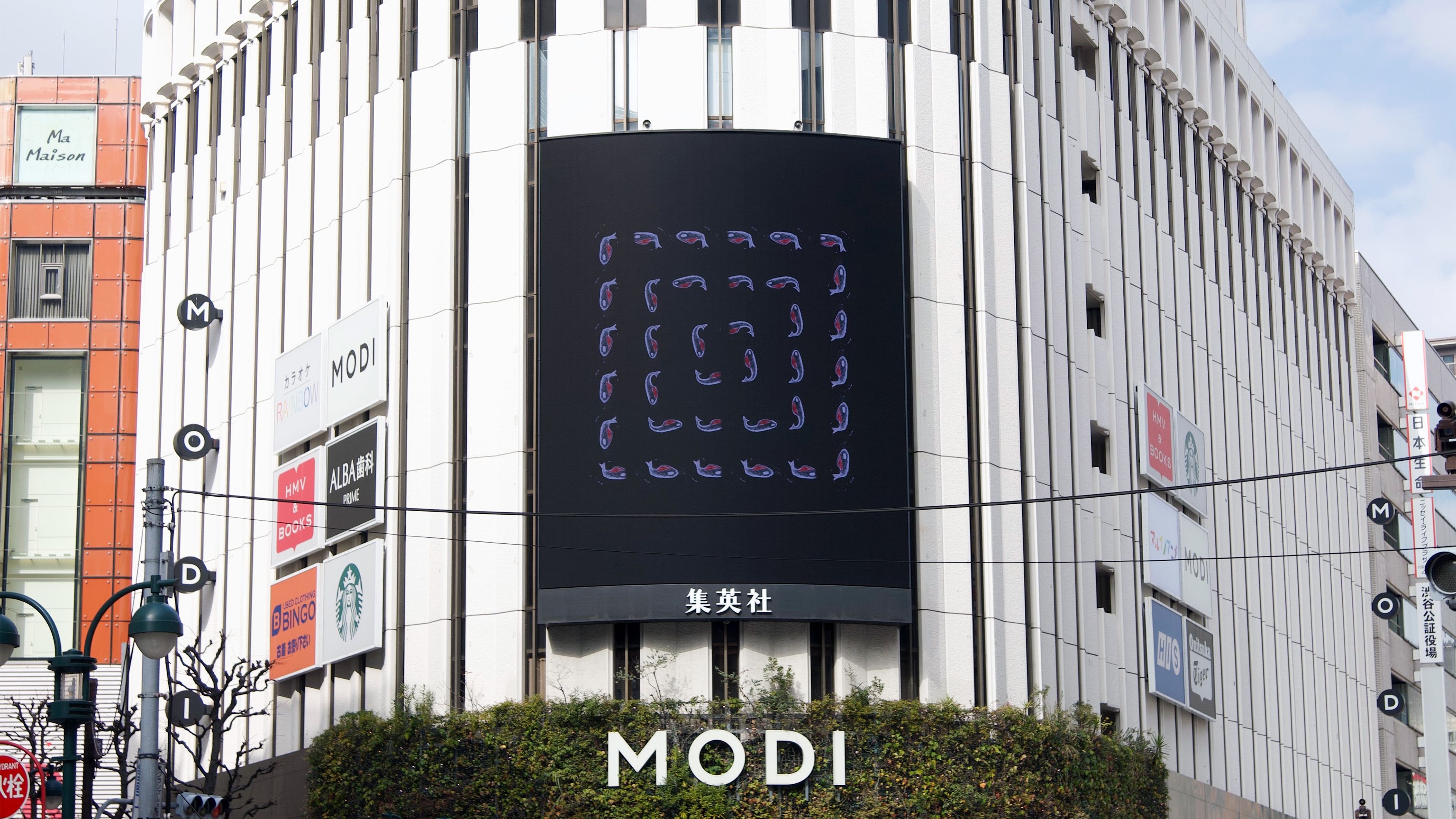
A generative animation that combines cellular automata with drawing. It is an attempt to gently occupy street signage—spaces that would once have been filled with excessive and flamboyant advertising—using movements that are as unobtrusive and calm as possible. The drifting animation on the screen is inspired by schools of salmon fry.
| Space | 集英社ビジョン |
| Period | 2026.2.13 -2026.2.15 |
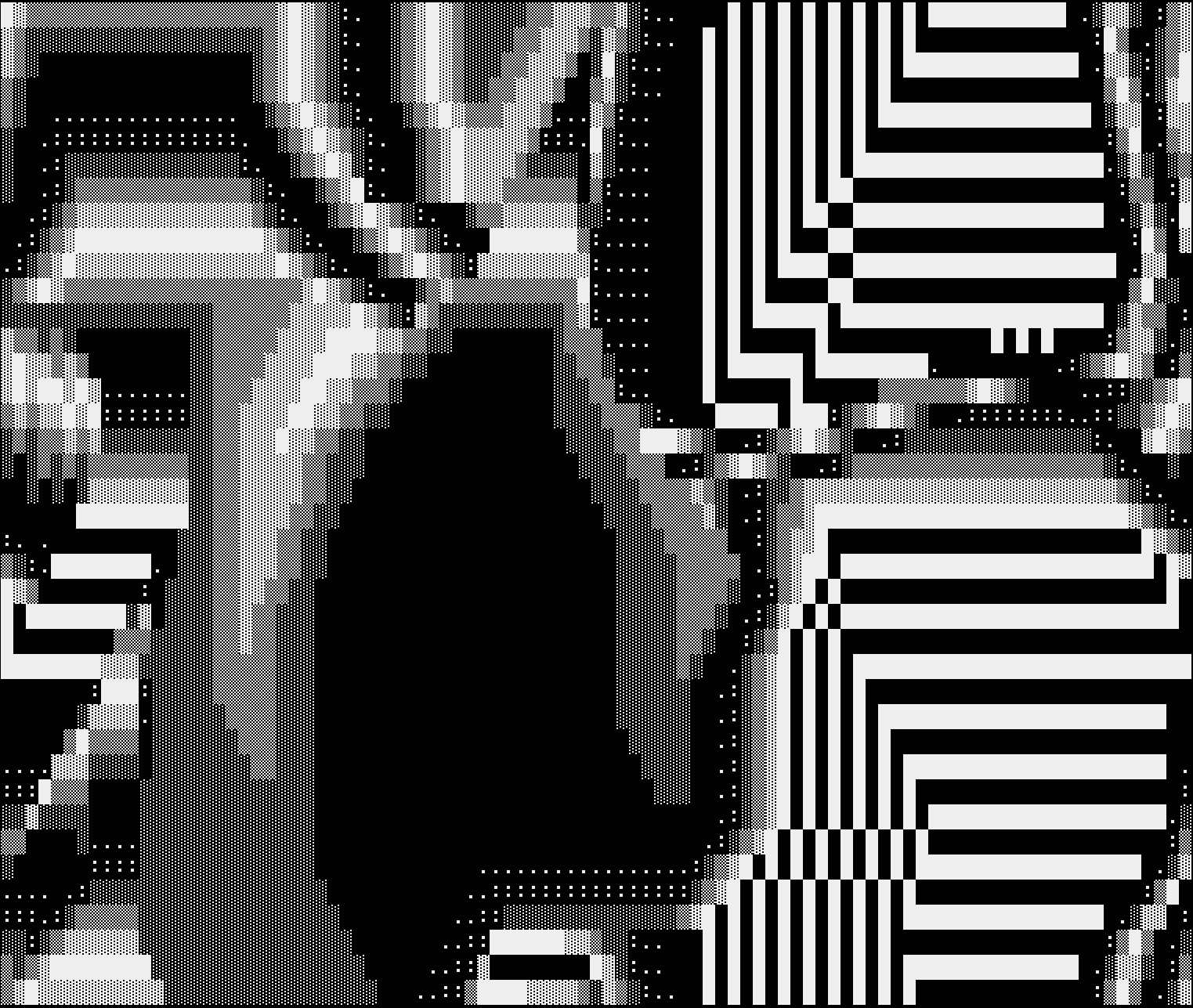
A series of dynamic constructions using text characters including letters, numbers and various symbols. Resolution-independent, kinetic and continuously evolving. The system gradually destabilizes and recomposes its own geometries.
| Space | 西武渋谷店A館エントランス アートゲート |
| Period | 2026.2.9 -2026.2.15 |
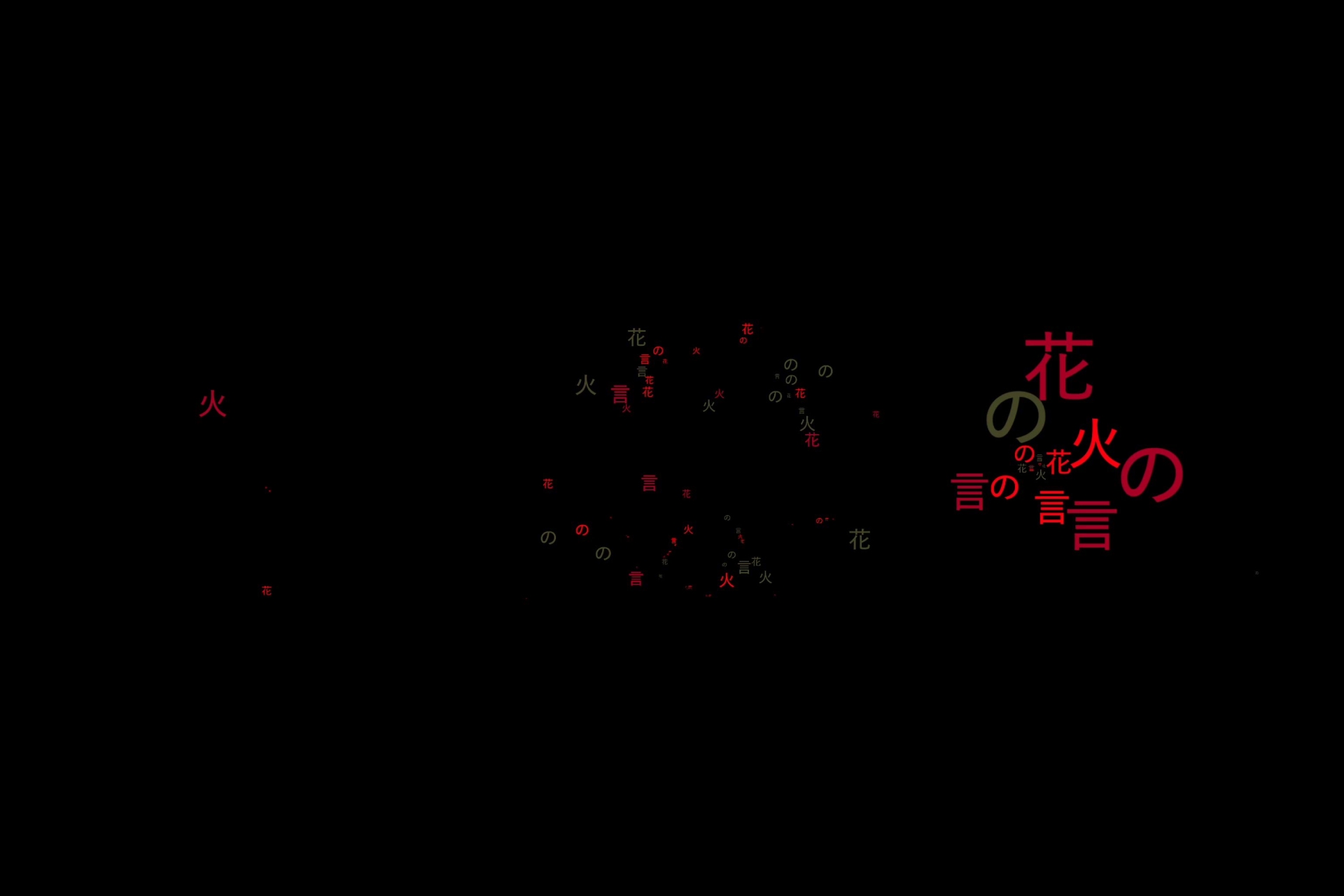
Words fade away. They vanish like sparks from a fire. They cannot be fixed in place. They cannot be stated definitively. In a city overflowing with easy, readily understood language, I will try to turn my personal state into words, and release it as light.
| Space | 渋谷PARCO プロジェクション |
| Period | 2026.2.14 -2026.2.14 |
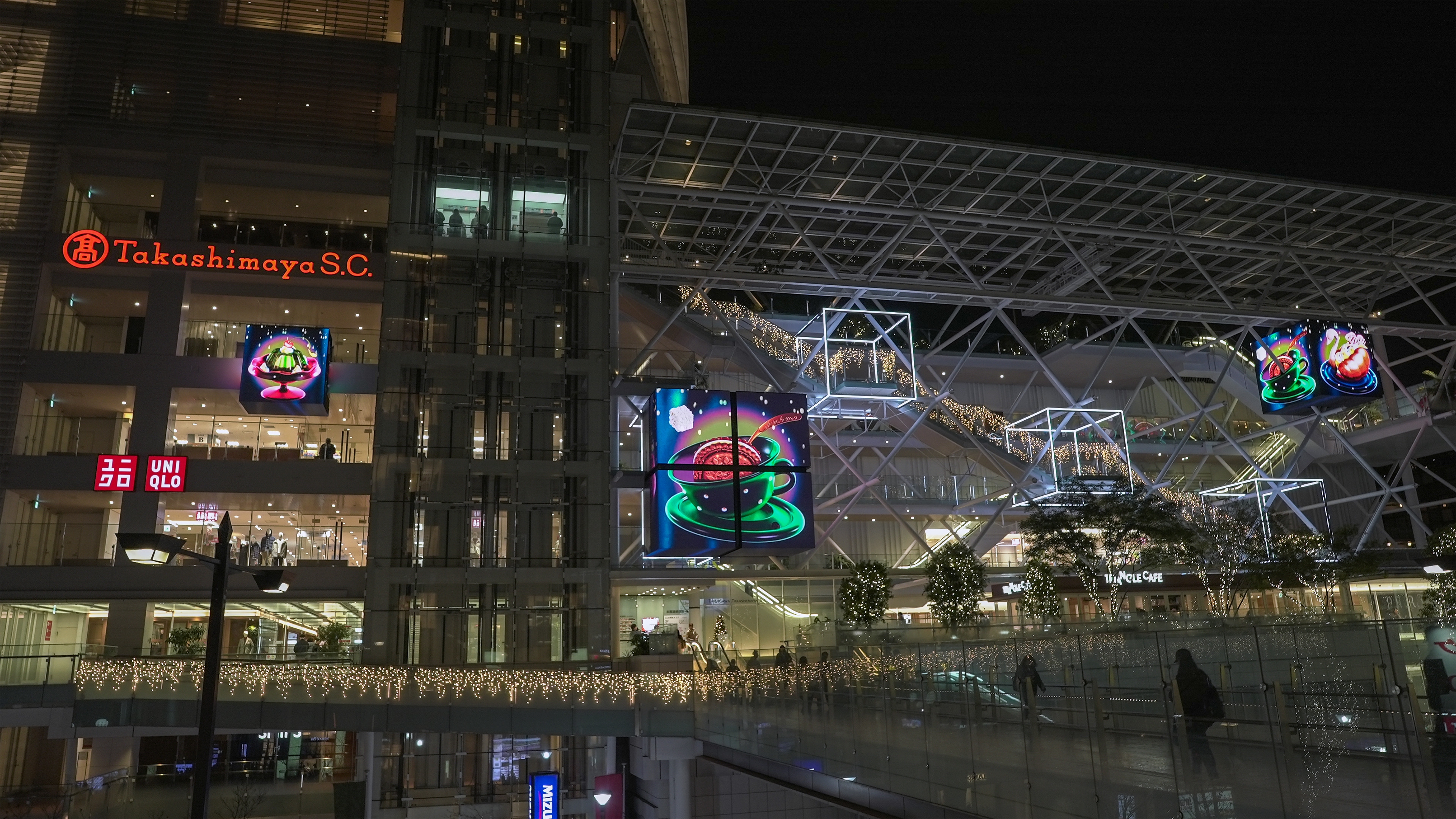
Unenchanting sweets dance and entice. Irresistible sweetness guides the workers, building up and then destroying cities. Aromance — Sweetness is always the entrance to ruin.
| Space | 玉川高島屋S.C. LEDキューブ |
| Period | 2025.12.2 -2026.1.4 |
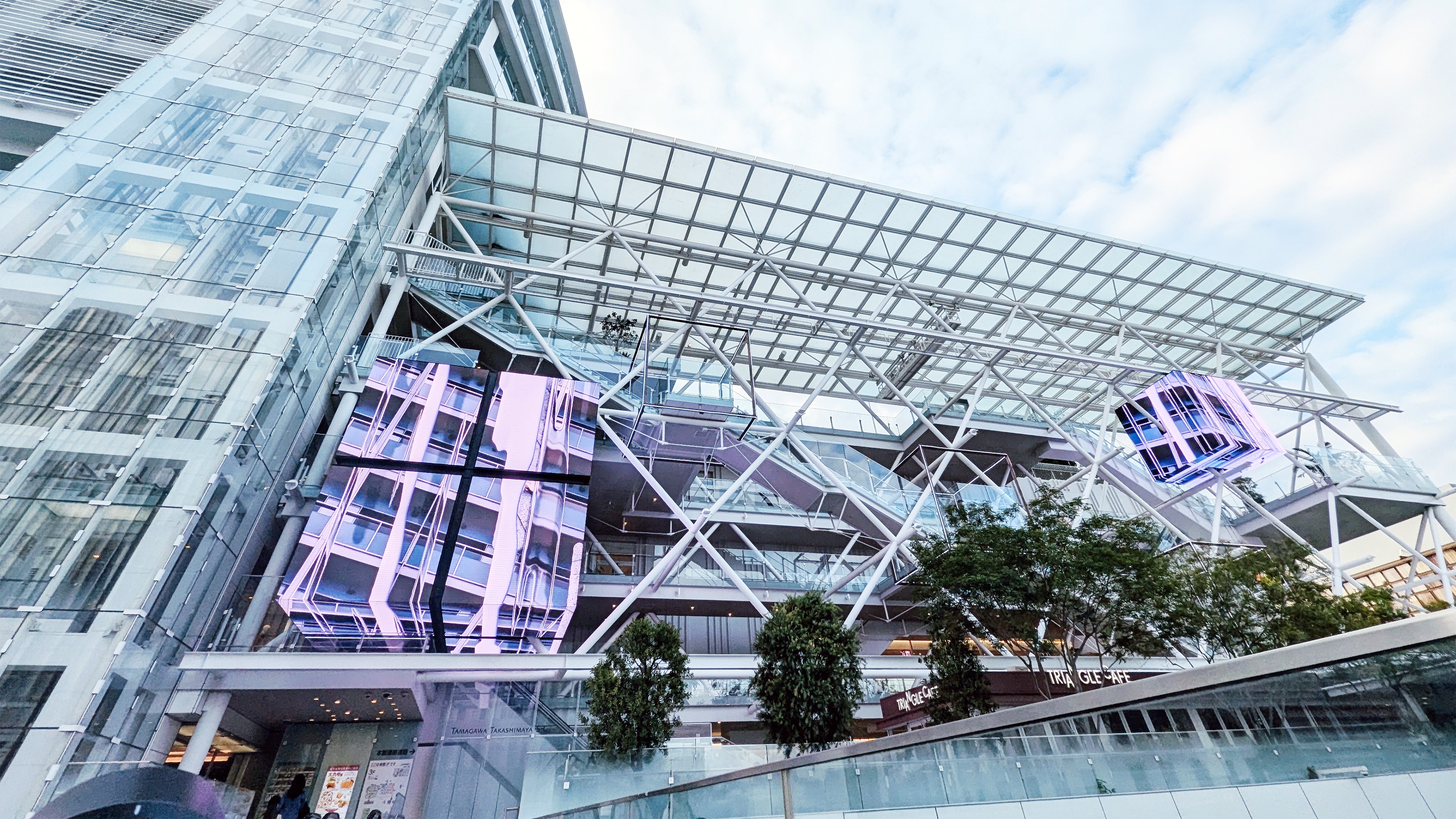
This video work reconfigures the cityscape of Futako-Tamagawa and the scenery of the Tama River, combining photographs and CGI. Applying the method of urban camouflage, fragmented and organized urban elements are abstracted and presented as colors, then reinserted into the urban space. While the video blends into its surroundings, it emerges as a slight anomaly, creating a sense of unease in familiar landscapes. This work consists of three patterns: orange, green, and blue.
| Space | 玉川高島屋S.C. LEDキューブ |
| Period | 2025.10.1 -2025.11.15 |
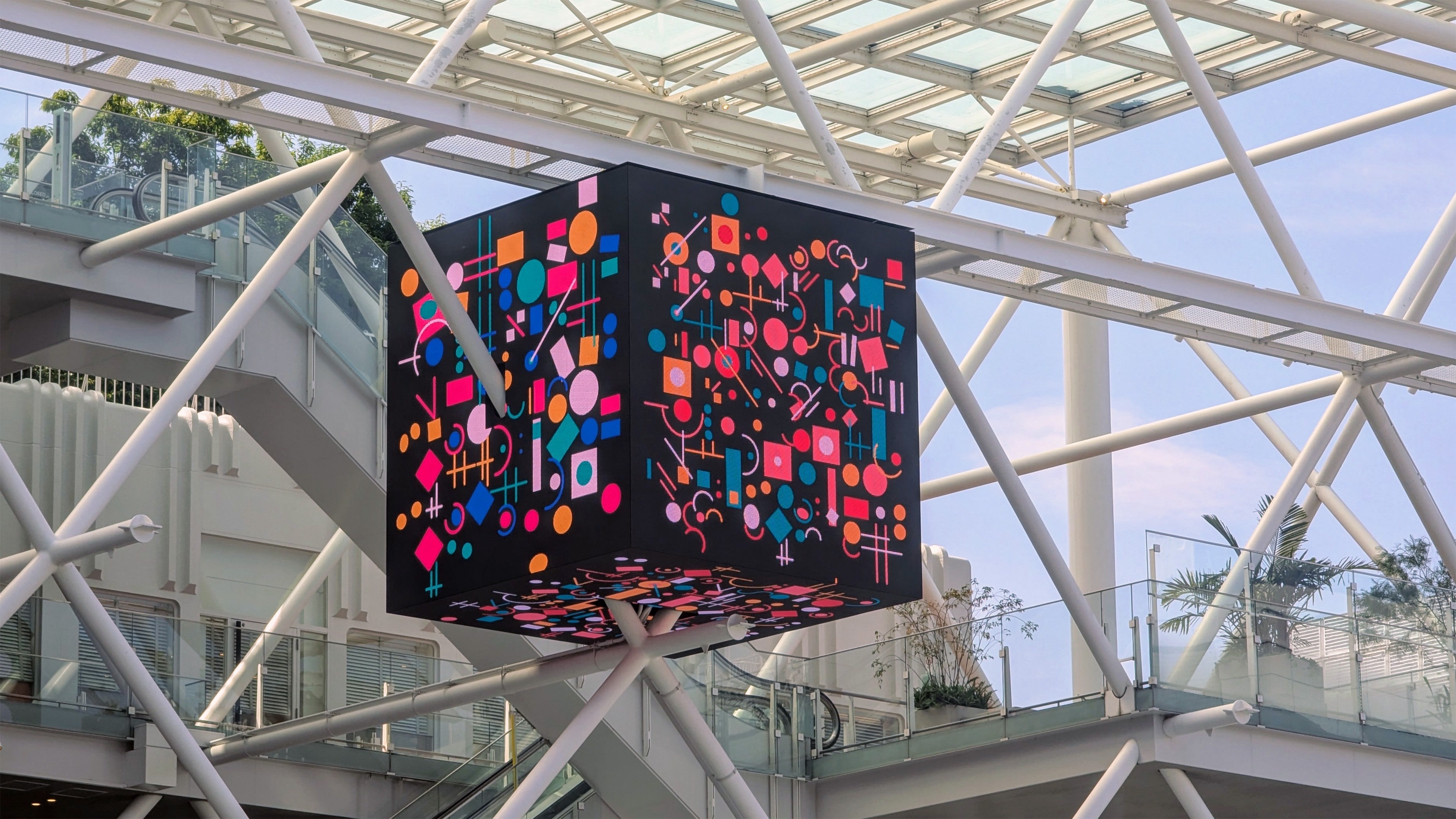
Inspired by the streetscape of Futako-Tamagawa, this artwork expresses the beauty of harmonious coexistence and blending: the rigid linearity and square aesthetic found in sophisticated buildings, and the vibrant vitality of supple circles and semicircles reminiscent of abundant nature. The transient appearance and disappearance of simple figures in a light rhythm, combined with eye-catching and approachable colors, leave a positive impression on the viewer.
| Artist | Okazz |
| Space | 玉川高島屋S.C. LEDキューブ |
| Period | 2025.7.18 -2025.10.31 |
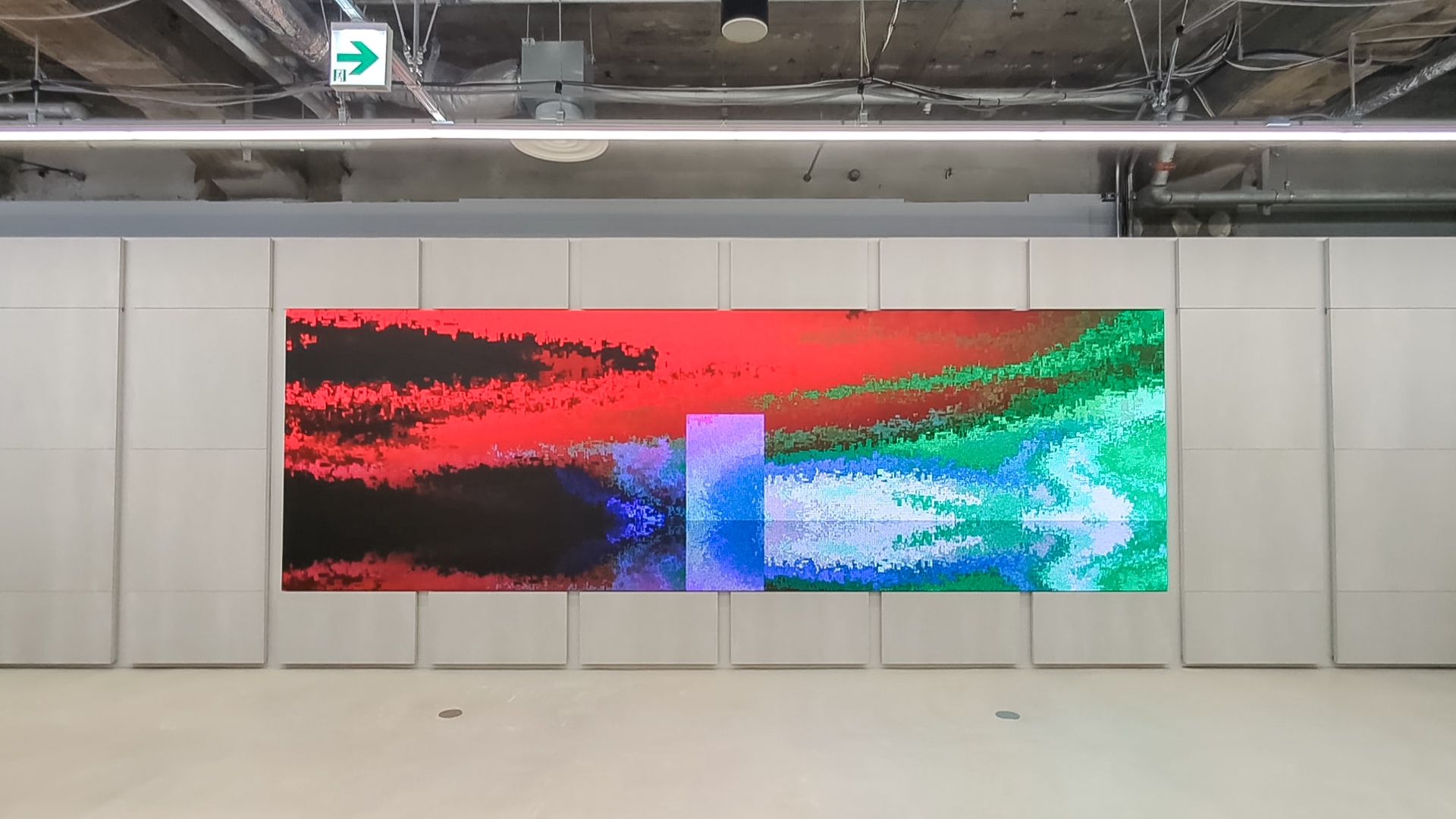
| Space | UN:O |
| Period | 2024.7.31 -2025.10.16 |
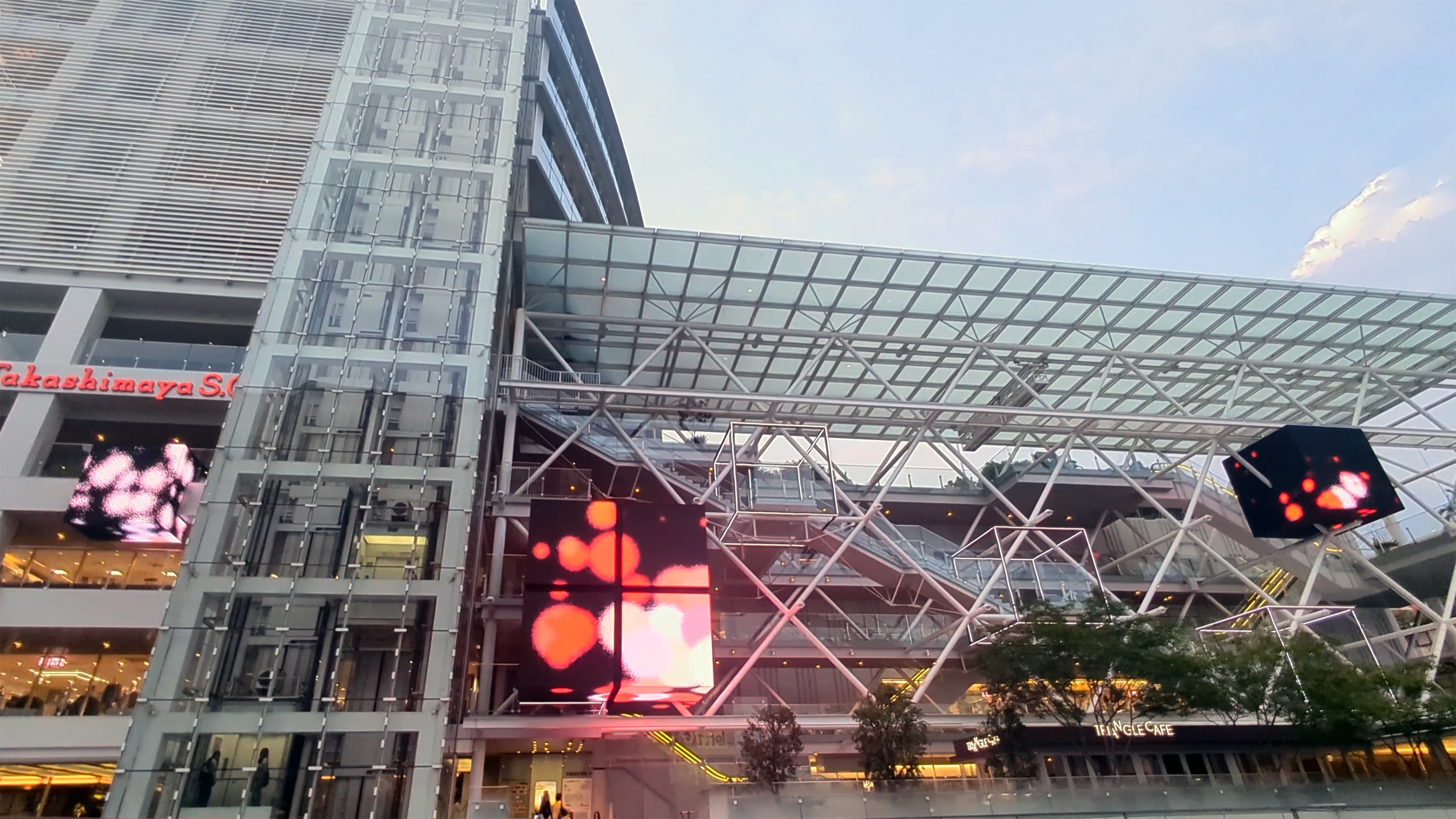
I long for a cozy space. I long for quiet time. With the proliferation of digital signage today, I feel that such places are being painted over in the city. After receiving this offer, I stayed and walked around the town of Futako Tamagawa. The sky, greenery, and earth, buildings and houses, were reflected in the Tama River, and it felt calming. I aimed for an image that felt like a painting drawn with light, where the summer light appears in various ways.
| Space | 玉川高島屋S.C. LEDキューブ |
| Period | 2025.7.19 -2025.9.15 |
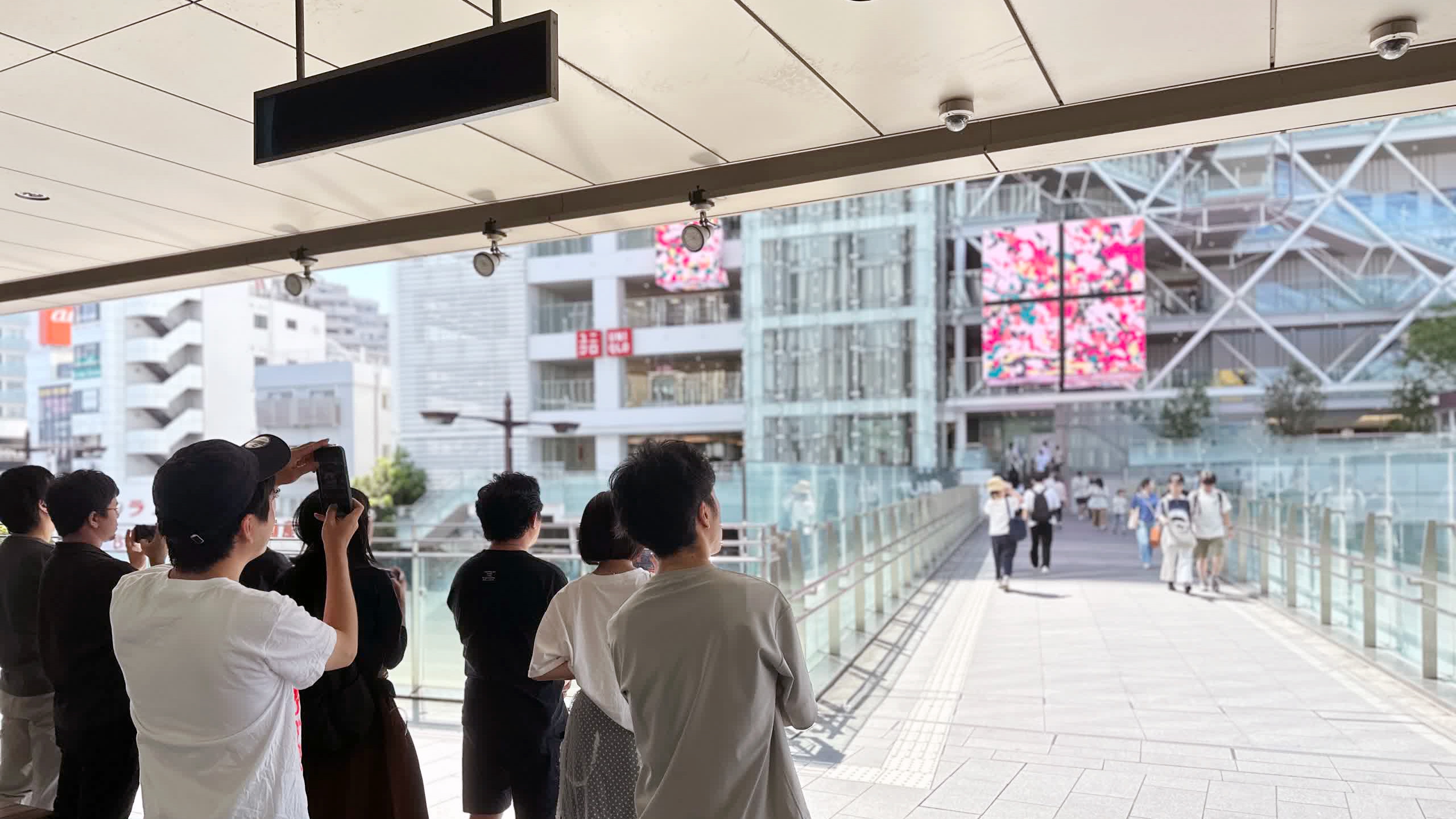
In the spring of 2025, the LED Cube appeared at the Tamagawa Takashimaya S.C. South Building. This unprecedented artistic expression brought new colors and a sense of the future to the city, and was welcomed with surprise by many. We are now holding an art workshop where participants will use this LED Cube as a canvas to create art pieces that match the atmosphere of Futako-Tamagawa and the unique shape of the cube, leading up to an actual exhibition of the works. Generative art is a form of art generated through computer algorithms. Leading the workshop is Shunsuke Takawo, an artist who advocates for daily coding as a way to integrate programming into everyday life, creating generative art as gracefully as one might write poetry or play a musical instrument. This workshop will begin with a lecture on how to create works for the LED Cube, using Mr. Takawo's piece "Engraving Light"—previously exhibited on the cube—as an example of the production process.
| Artist | hiraiken, Yuta Aoki, chobishiba, UBU_3ur3k4, , Takumi Tajima, annin🥛 | Aino Kishimoto, Stash, yskaksk, k-ogi(QumiiKo), kenbunroku, |
| Space | 玉川高島屋S.C. LEDキューブ |
| Period | 2025.8.17 -2025.8.31 |
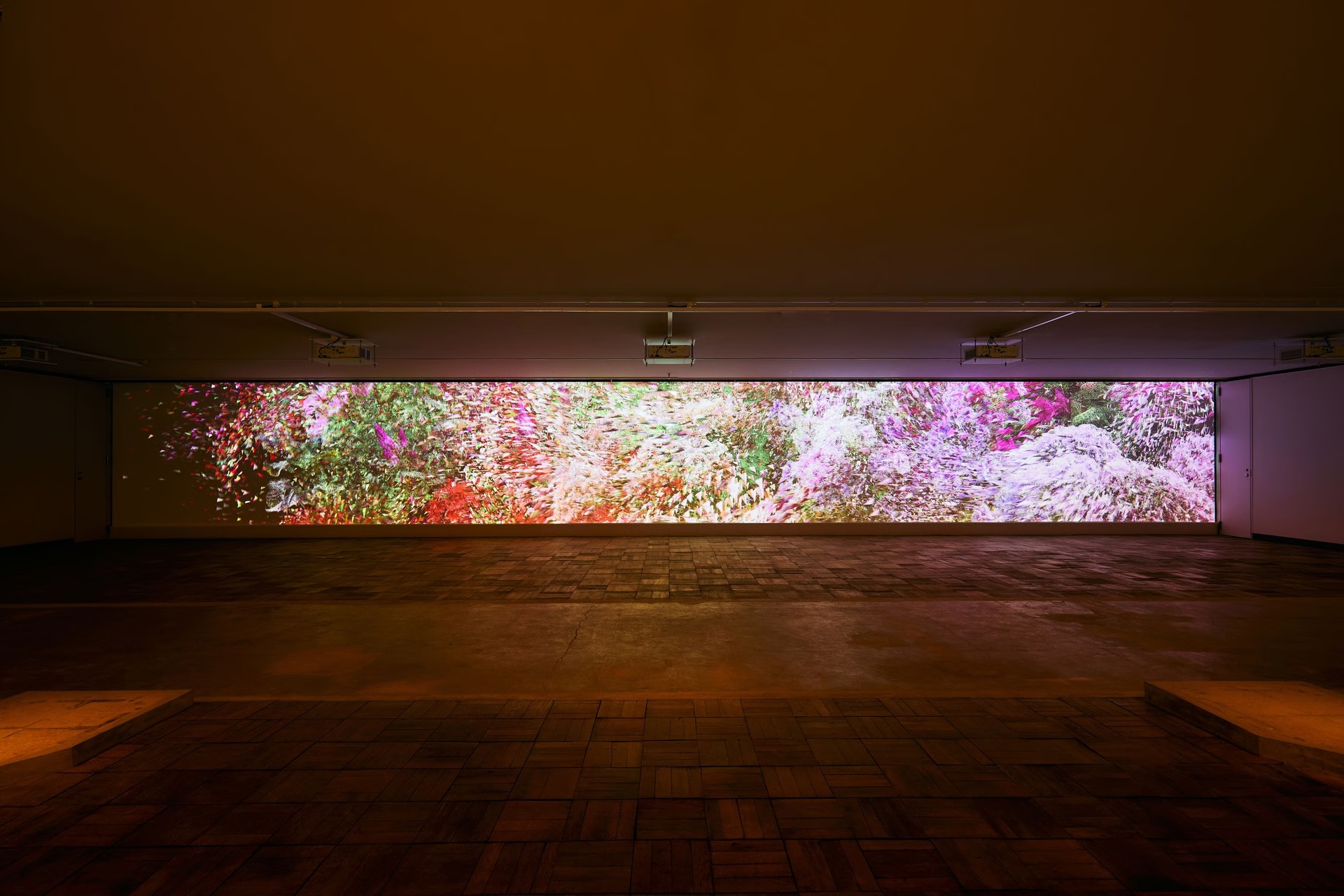
This artwork centers around a bouquet created using data collected from various locations. The paper airplanes soaring through the sky represent the process of people sending messages to each other. These paper airplanes reflect the colors of the flowers and fly outwards from them. As a symbol of "letter culture," the paper airplanes visually express how each message reaches important people.
| Space | AxCROSS |
| Period | 2024.7.31 -2025.7.30 |
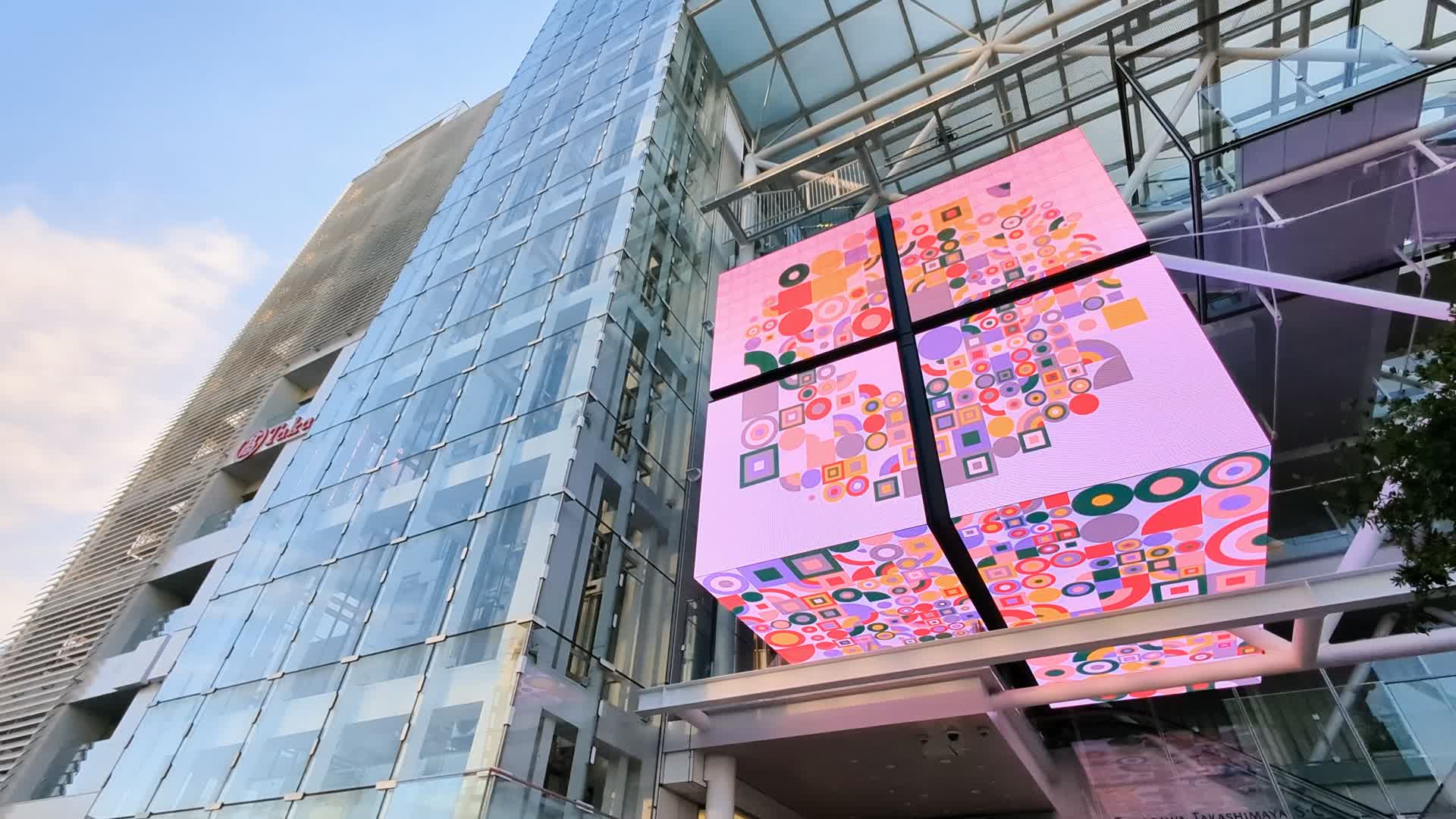
The new work, "Carving Light," is a generative art piece that depicts the trajectory of light as it changes in response to the calendar. The light projected onto three LED cubes was created with the intention of subtly changing shape in resonance with the passage of time and melting into the urban space. The programmatically generated visuals breathe, changing from delicate pulsations to bold fluctuations.
| Space | 玉川高島屋S.C. LEDキューブ |
| Period | 2025.3.20 -2025.7.17 |